Fintech · UX/UI & Graphic Design
Rebit
Rebuilding a Fintech from the Ground Up
Rebuilding a Fintech from the Ground Up
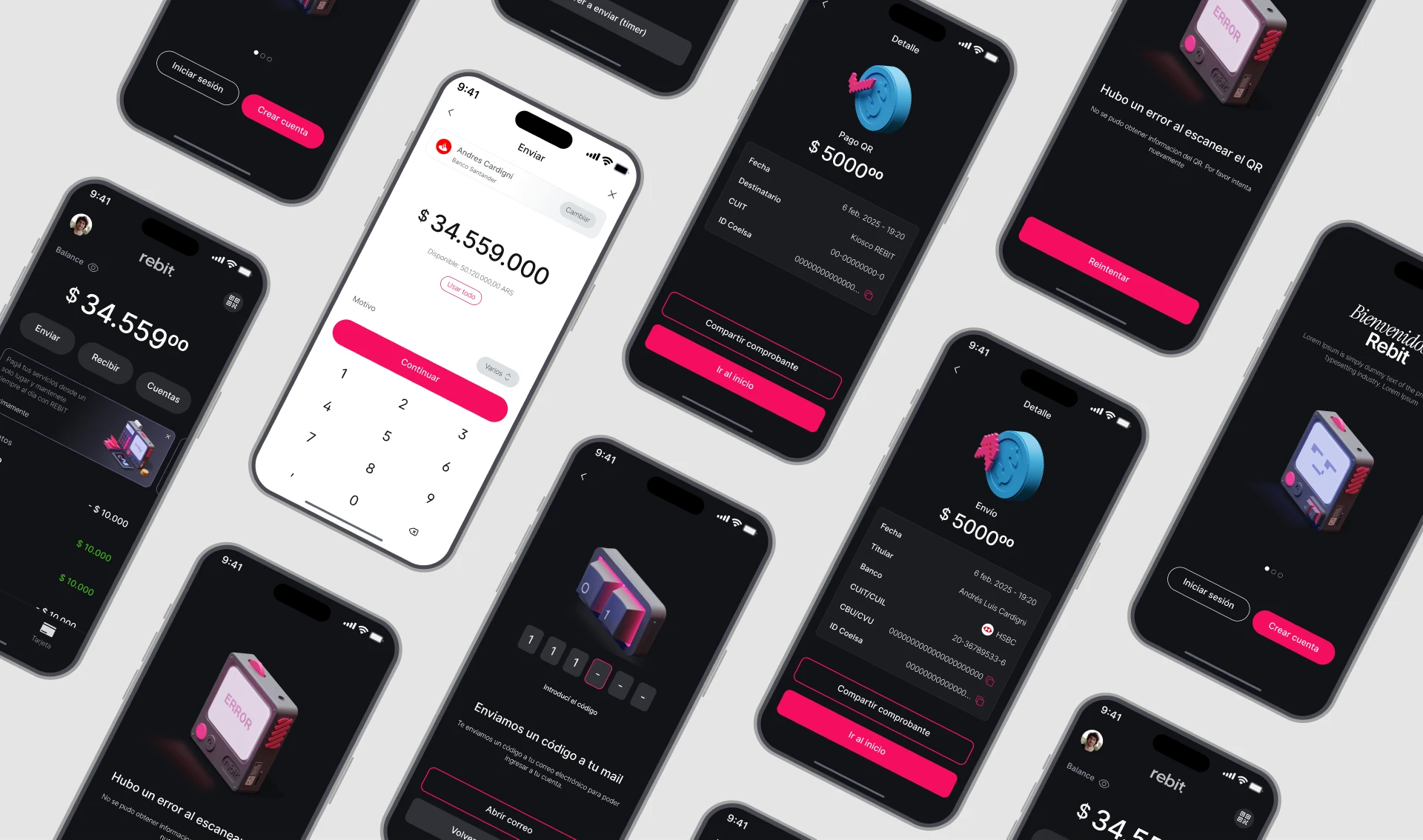
Rebit didn't start as a rebranding request — it started as a request to make the whole thing coherent: rebranding, yes, but also end-to-end UX/UI, flows and product. We were after a new face for the project — from Brik Federation to Rebit — and that covered the name, its registration, building the brand, and a full product redesign.
I led both the graphic design and UX/UI teams on this project — two disciplines that rarely get to move in lockstep, but here they had to. Rebit is the consumer-facing wallet inside the same holding structure as GOAT, the PSP. My first move was to define the problem clearly for the team and the CEO: this wasn't a redesign job, it was a rebuild — new name, new brand, new design system, and a documented workflow that could actually connect design to development.
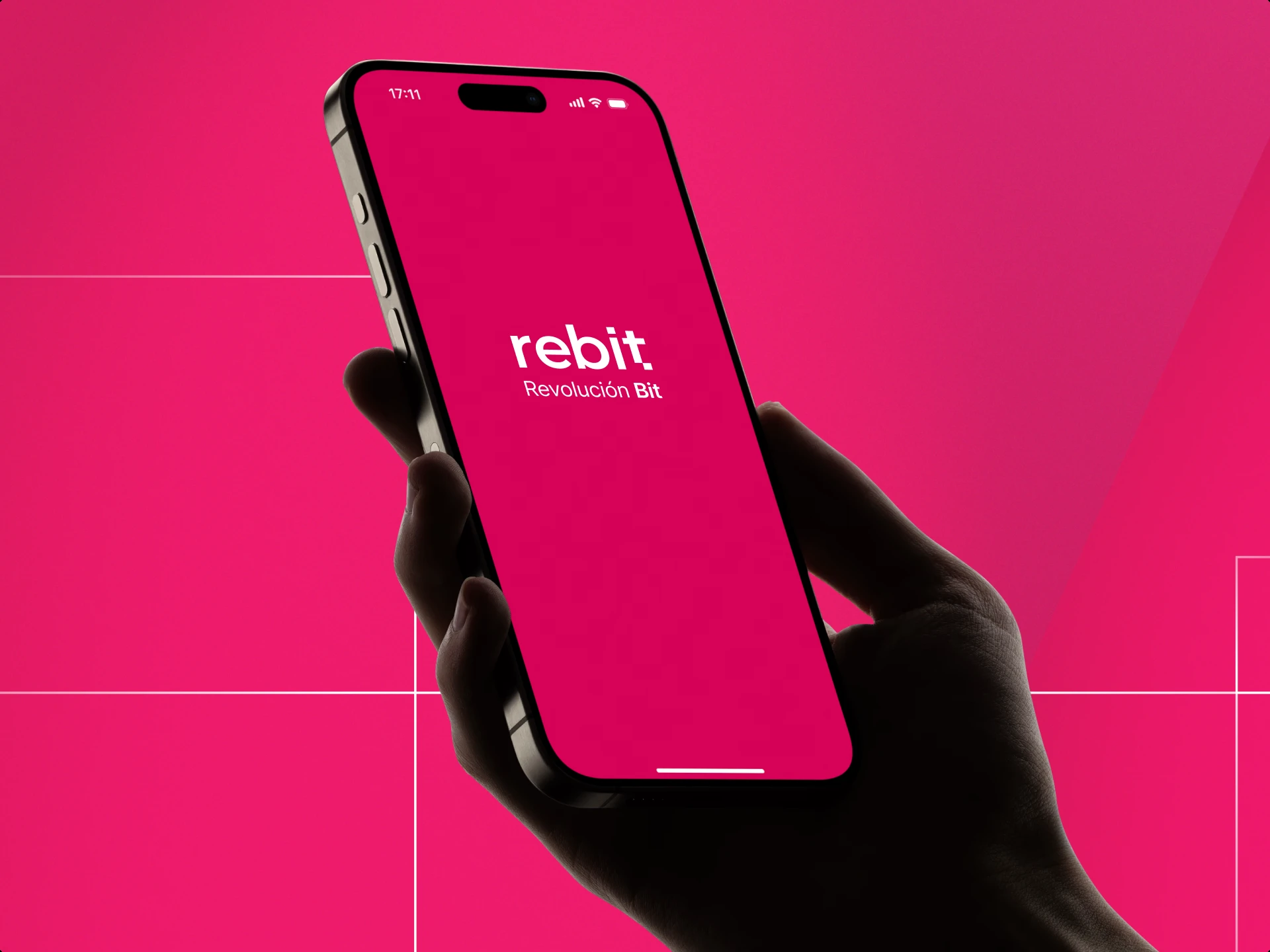
The existing product had grown organically, feature by feature, without a system holding it together. Every screen felt like it belonged to a different app, with no shared visual language, no component library, and no clear handoff process. On top of the product problem, there was a business one: the brand needed to be credible enough to support investor conversations — a wallet app competing for trust in a market full of established players couldn't look like a side project.
We started from zero on the brand — name, identity, color system, typography — before touching a single screen. From there I built the design system from the ground up: primitives first — color, typography, spacing, and radius tokens — then 13 atomic components, each covering every state, and around 12 molecules built from combinations of those atoms. With the foundation in place, we designed and shipped three progressive versions of the app: an initial MVP, a more complete version once core flows were validated, and an extended version with deeper functionality that was fully designed and is currently rolling out.

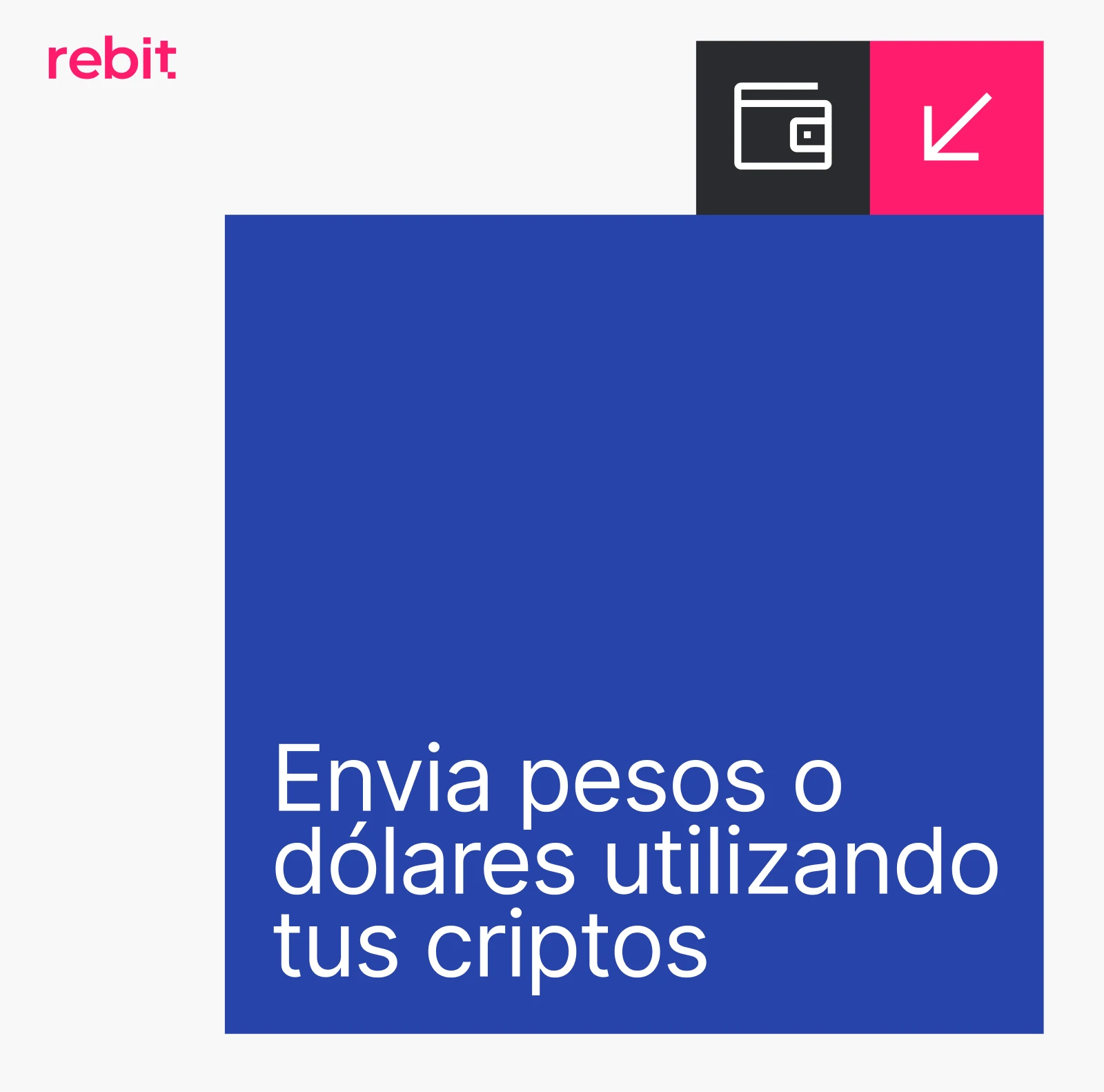

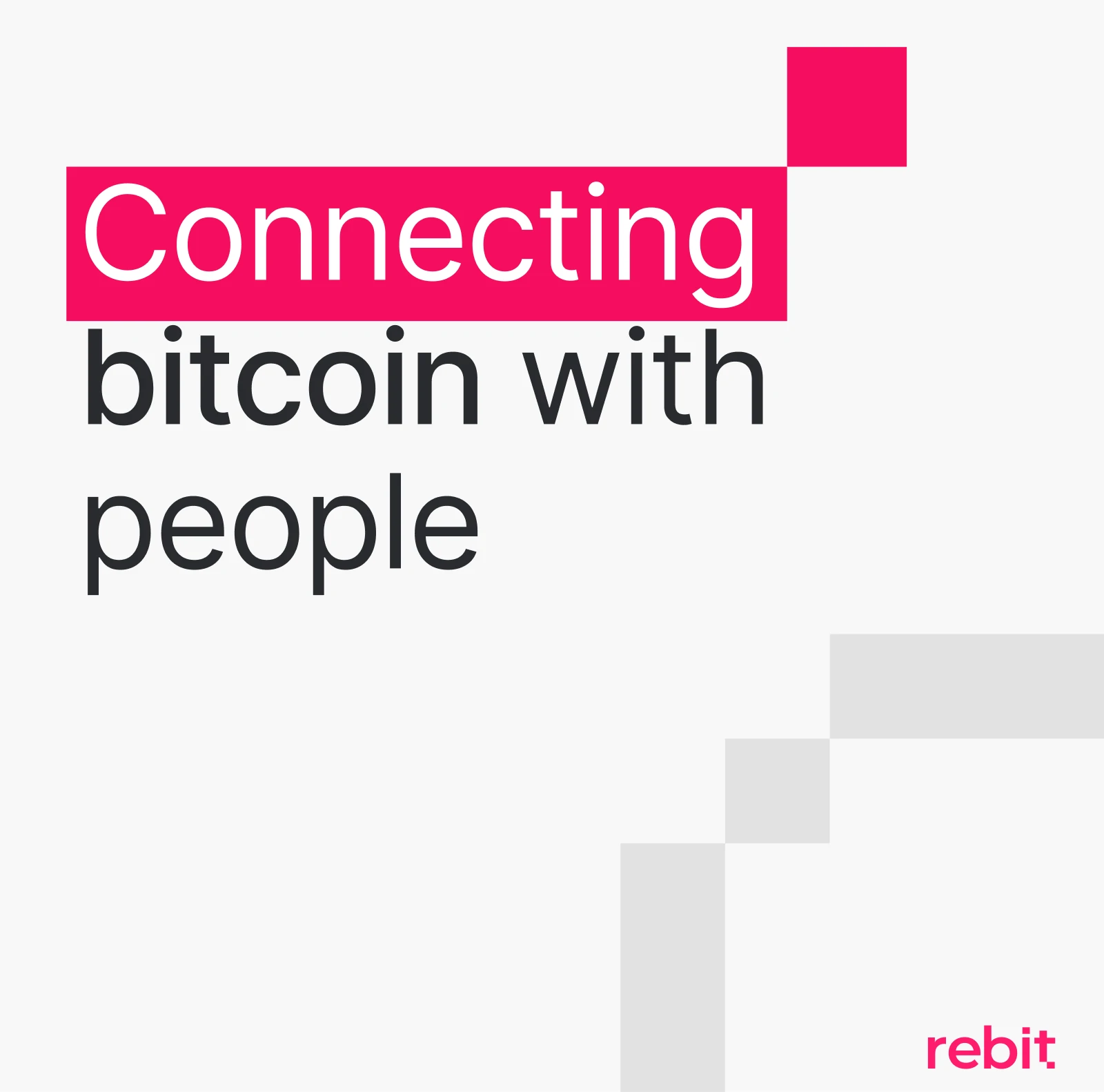
We shipped a working app built for scale, a complete design system — 13 atoms, 12 molecules, and a full set of primitives — and a brand that could support investor conversations. Our job was to make sure design was never the bottleneck again, and it wasn't.
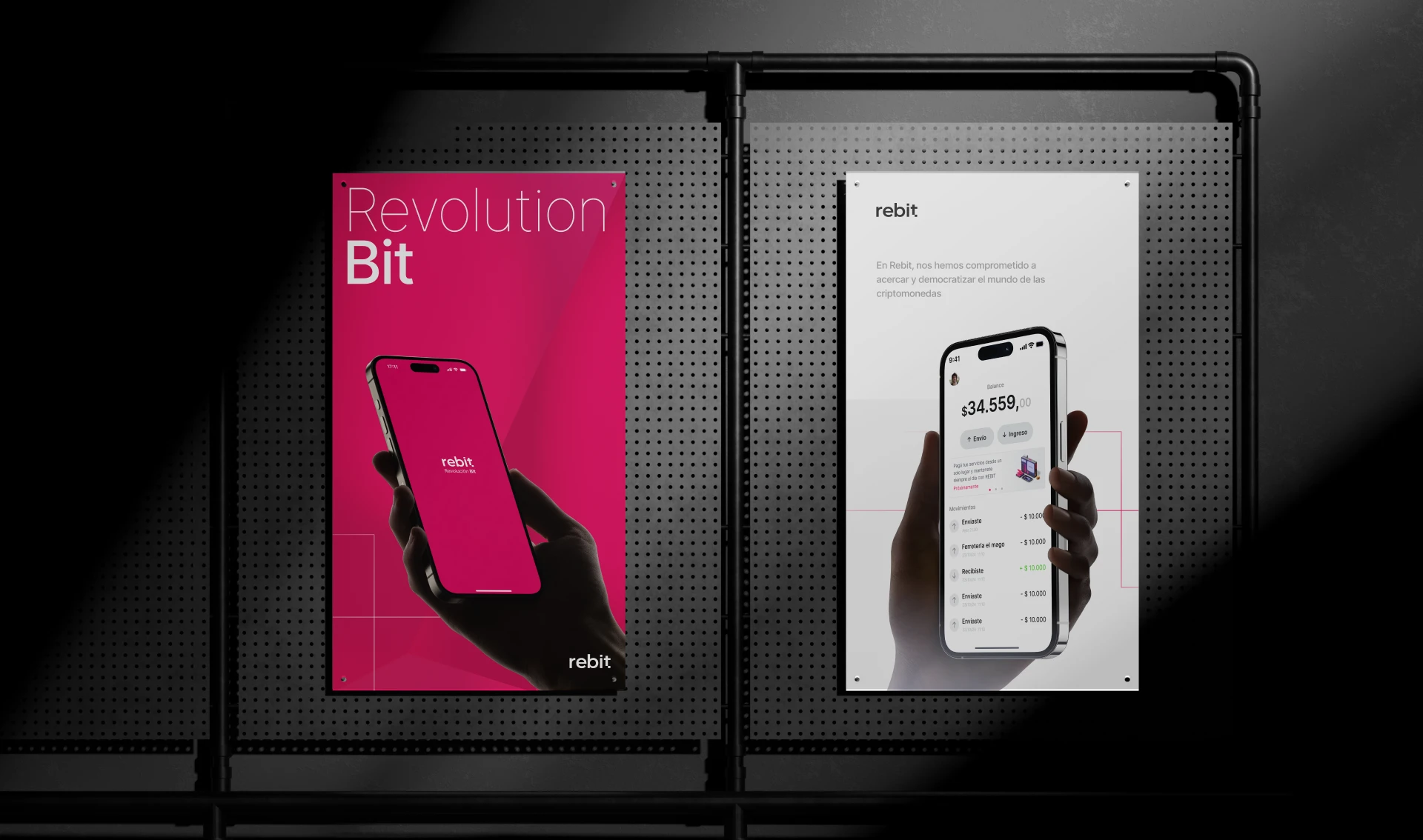
At Rebit it became clear that a design system isn't a deliverable, it's a discipline: it only works if the team keeps using it after the project "ends". The real win wasn't the file we handed over, it was the workflow that stopped design and development from working against each other.