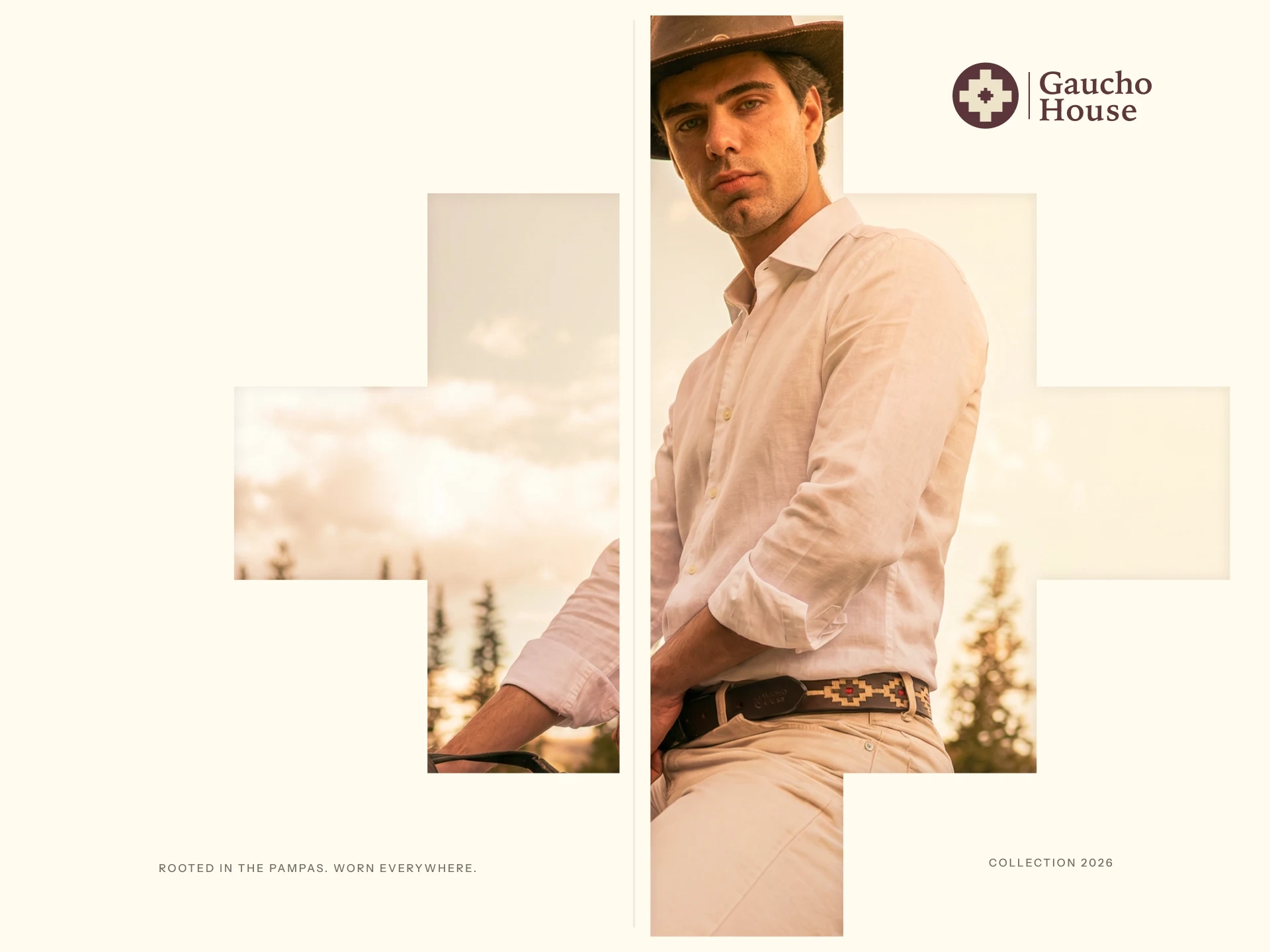
Freelance · Wholesale Leather Goods · Branding, Catalog Design
Gaucho House
Wholesale Catalog & Sub-Brand Identity for an Argentine Leather House
Wholesale Catalog & Sub-Brand Identity for an Argentine Leather House
Gaucho House needed a wholesale catalog that could carry two brands at once — its core leather goods line and Patagonia Forged, a knife and BBQ sub-brand — while their own product photography library couldn't keep up with either one.
Gaucho House is an Argentine leather goods business — produced in Argentina, sold in Australia — built on a simple premise: some of the finest leather goods in the world are made in Argentina by hand, and Gaucho House exists to bring those goods — and the artisans behind them — to the world. Alongside their core leather goods line, they were launching Patagonia Forged, a curated sub-brand of hand-forged steak knives and BBQ accessories.
I worked solo, directly with the client, across four connected pieces: harmonizing Gaucho House's existing graphic elements into a system consistent enough to build a catalog on top of, building the full wholesale catalog for both brands using that corrected system, creating a complete visual identity — vertical stylescape and logo — for Patagonia Forged from scratch, and developing a documented AI photography prompt system so the client could keep producing consistent product imagery long after the project ended.

Three problems arrived at once. First, a repair problem: Gaucho House's existing graphic elements weren't consistent enough on their own to carry a multi-category wholesale catalog — they needed correction and harmonization before any new page could be built on top of them. Second, a brand problem: Patagonia Forged had to feel like it belonged to the same house as Gaucho House's leather goods — same level of craft, same Argentine sourcing story — while reading as its own thing on the shelf, since a knife buyer and a polo-belt buyer aren't necessarily the same retailer. Third, a production problem that couldn't be solved with a one-off fix: a meaningful share of the catalog's product photography wasn't final or didn't exist yet, and generating a folder of one-time images wouldn't help once the client needed a shot for a product that didn't exist during the project.
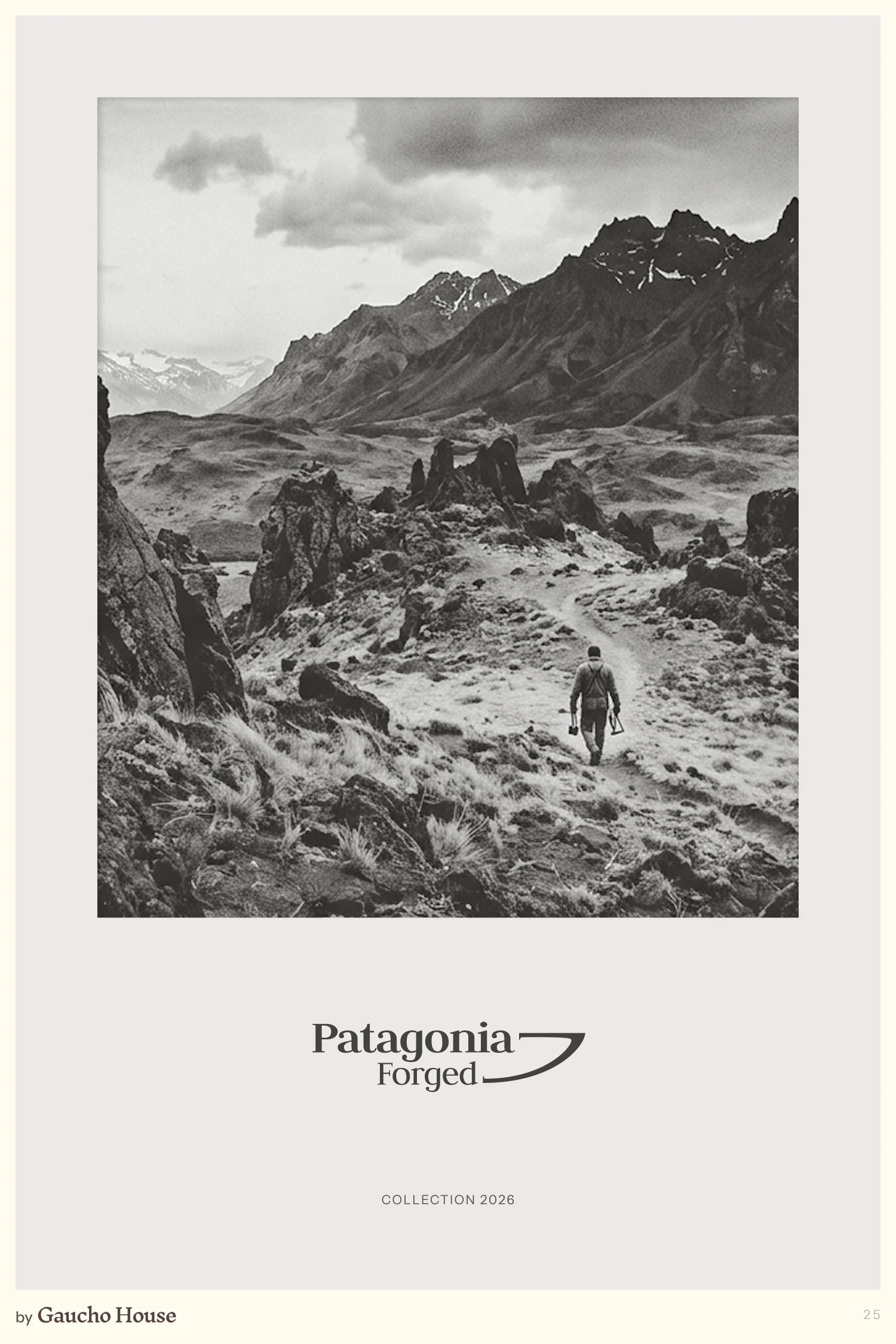
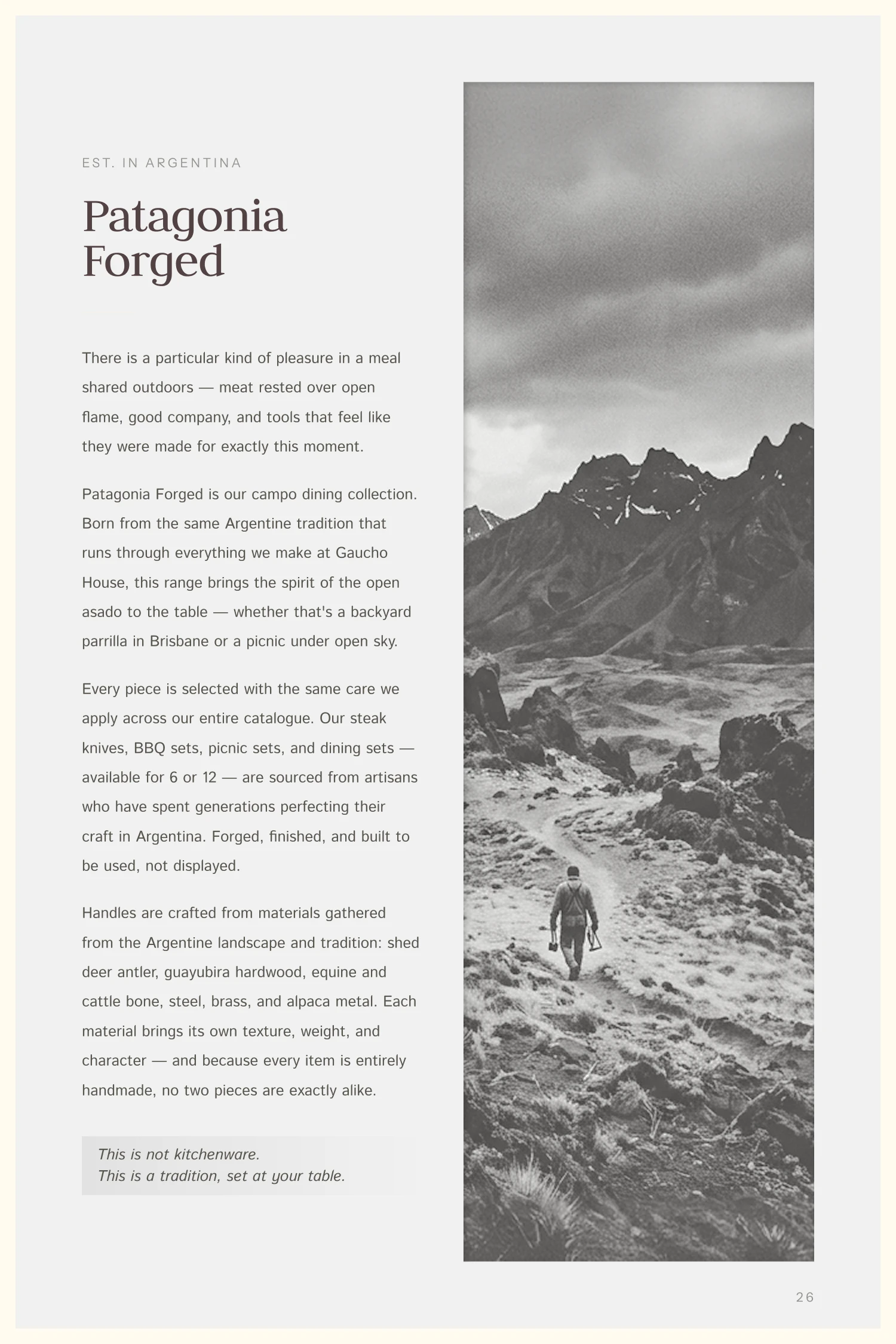
The first job wasn't new design — it was repair. Before touching the catalog, I went through Gaucho House's existing graphic elements and harmonized them into a system consistent enough to scale across dozens of product pages. Patagonia Forged, by contrast, started from scratch: I designed the logo and built a full vertical-format stylescape — a colorimetry system (deep forged russet and carbon tones against a warm stone background, specced in HEX, RGB, CMYK and Pantone), a typographic hierarchy pairing a serif for headings with a plain sans for body and SKU text, and mockups showing the mark applied to laser-engraved product and printed collateral — so the client could validate direction fast without waiting on a full brand manual.
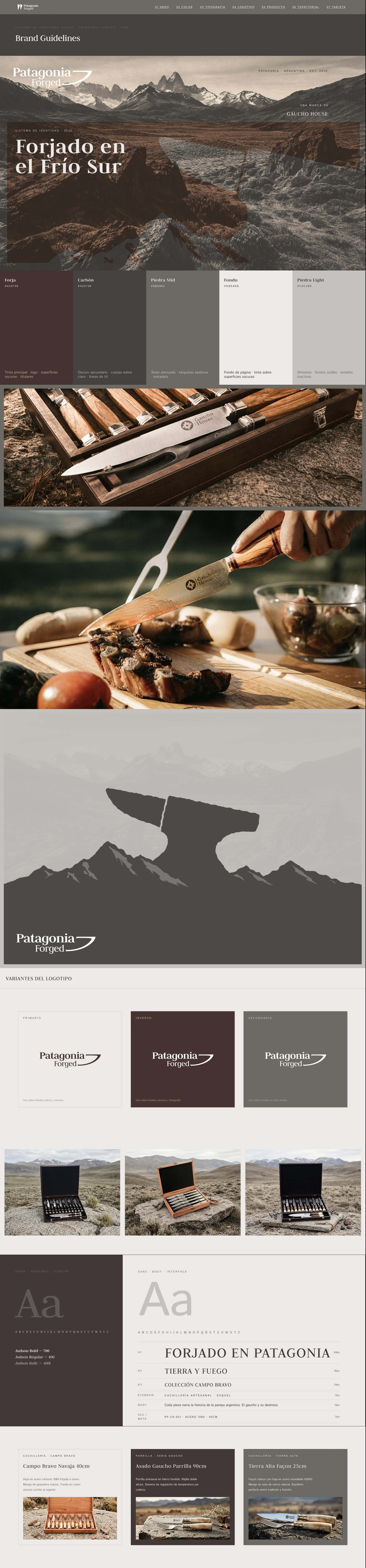
↕ Scroll to explore
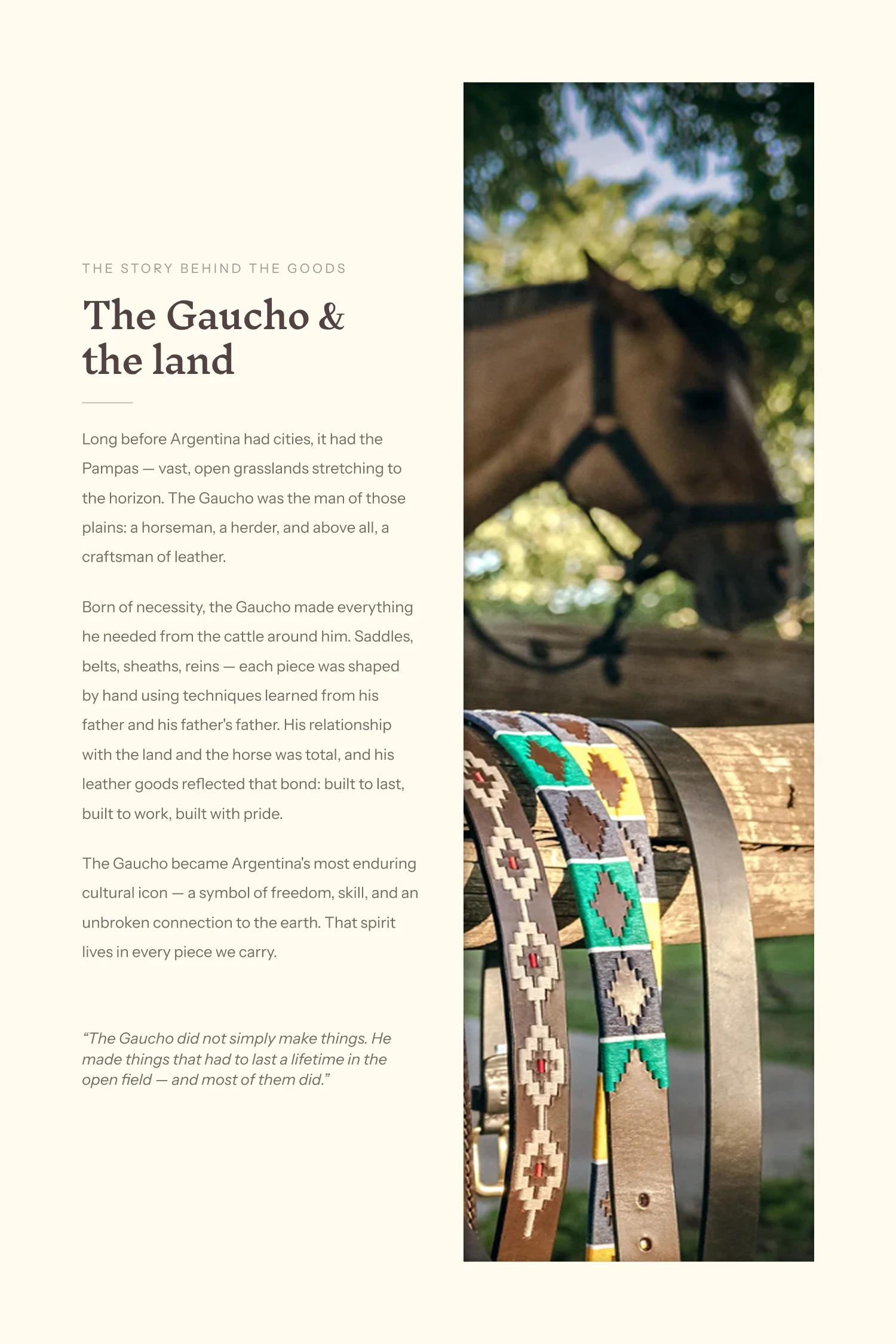
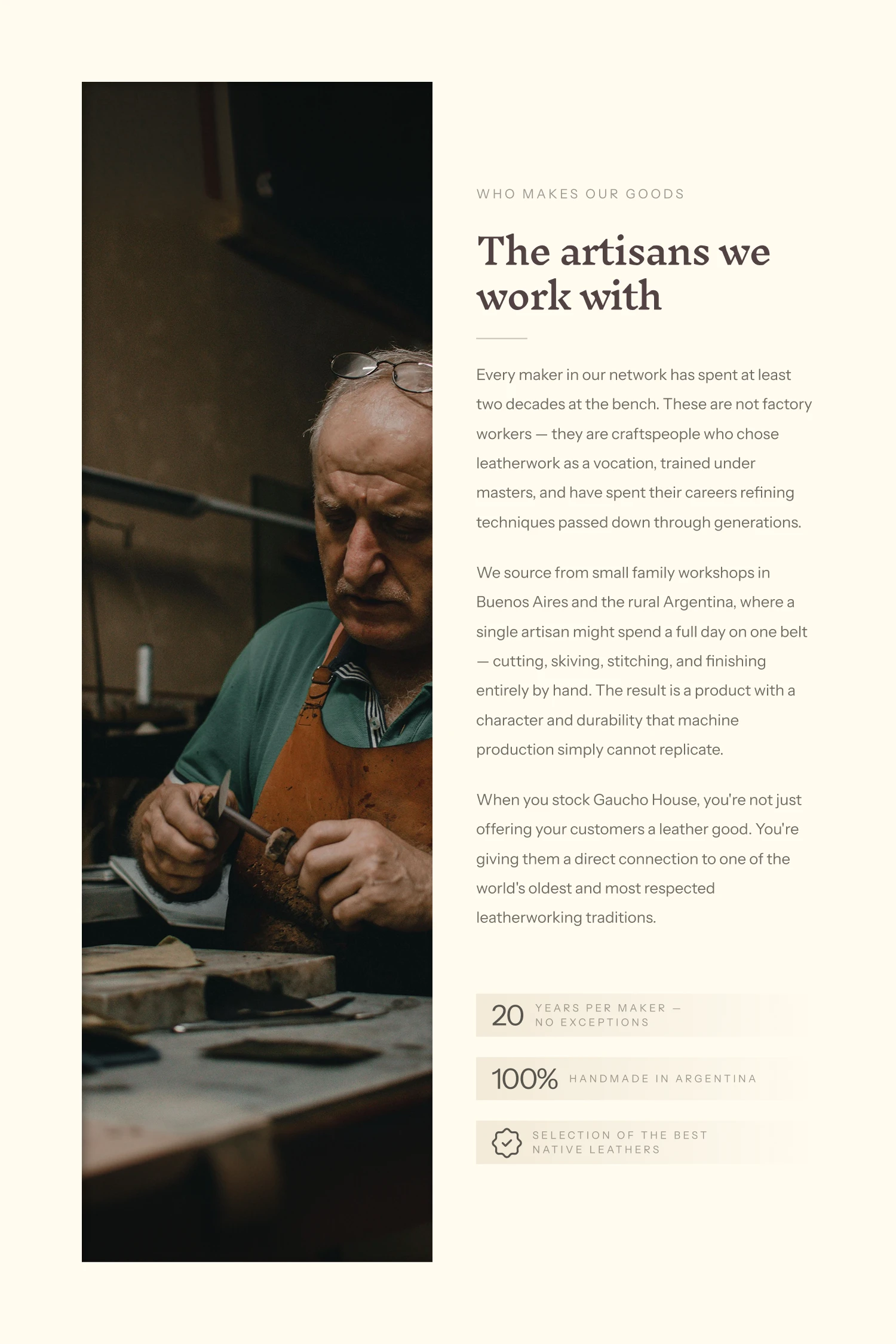
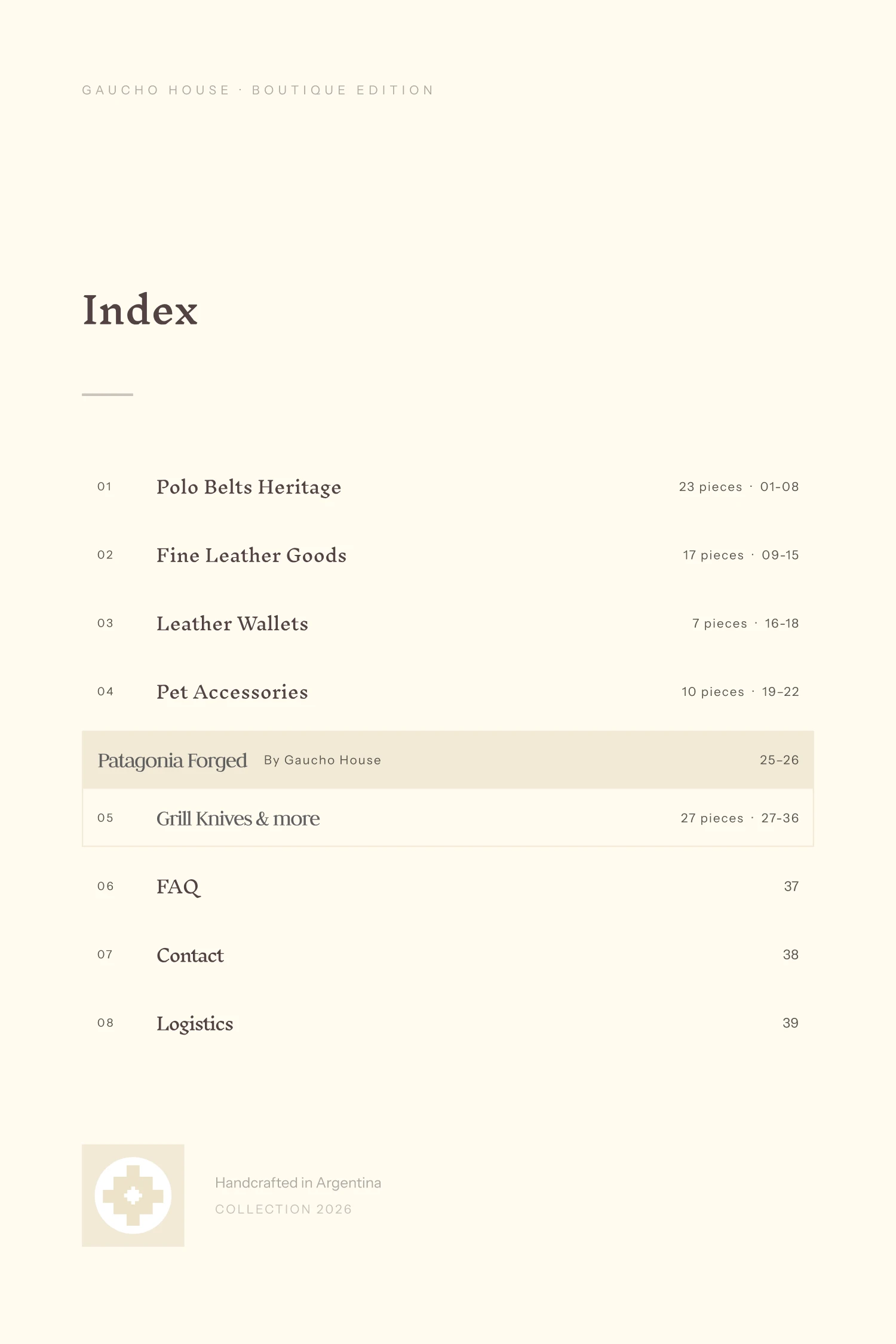
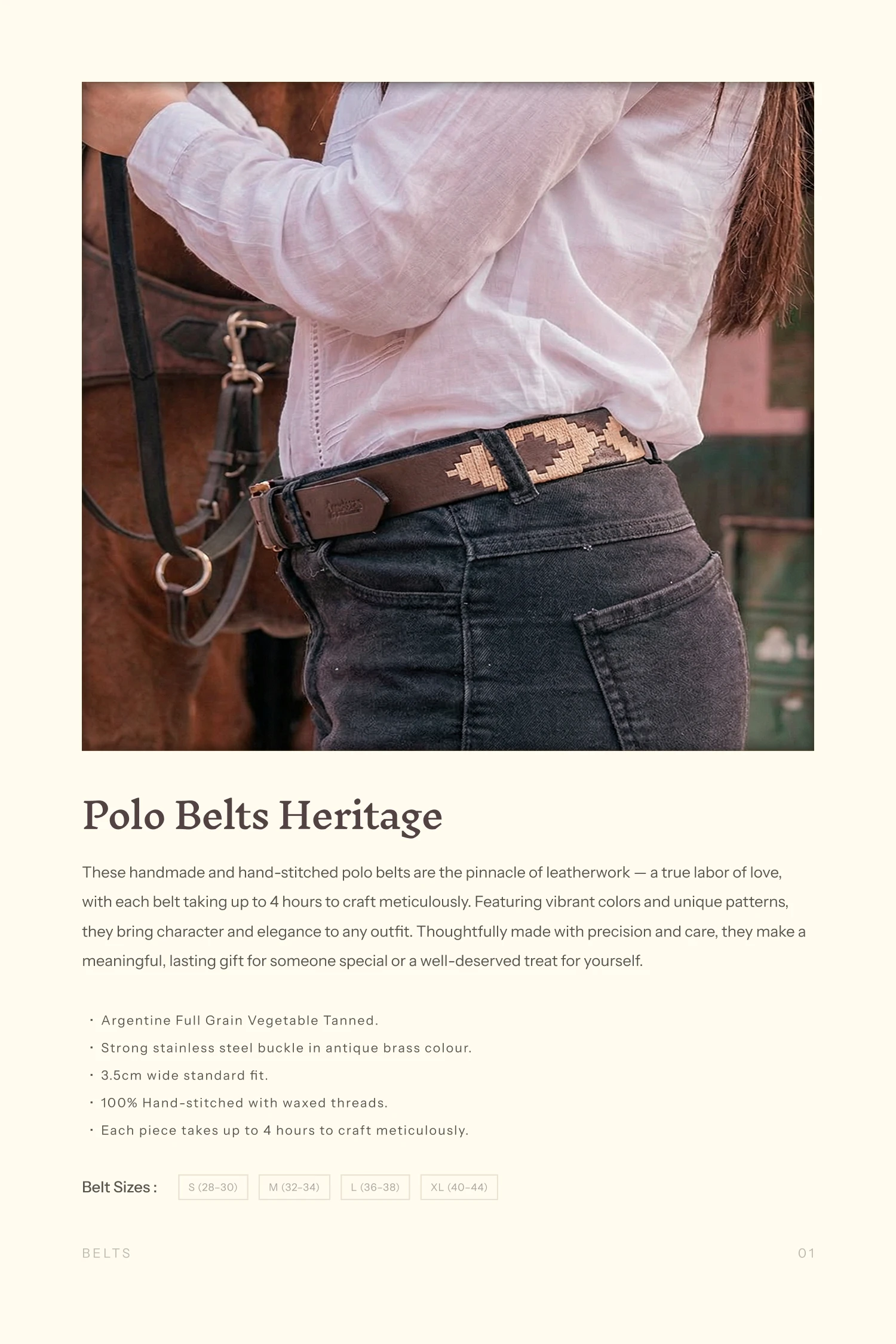
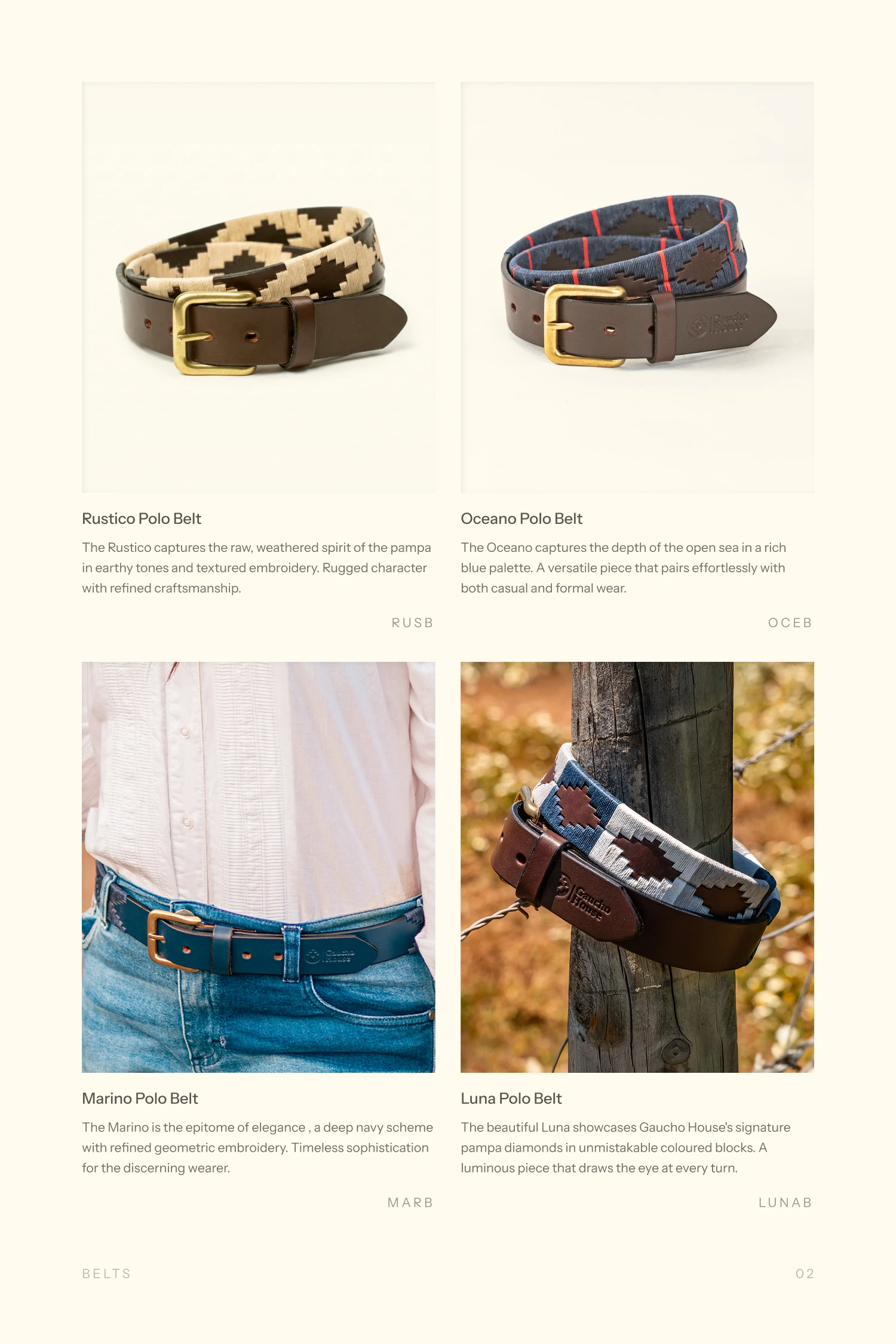
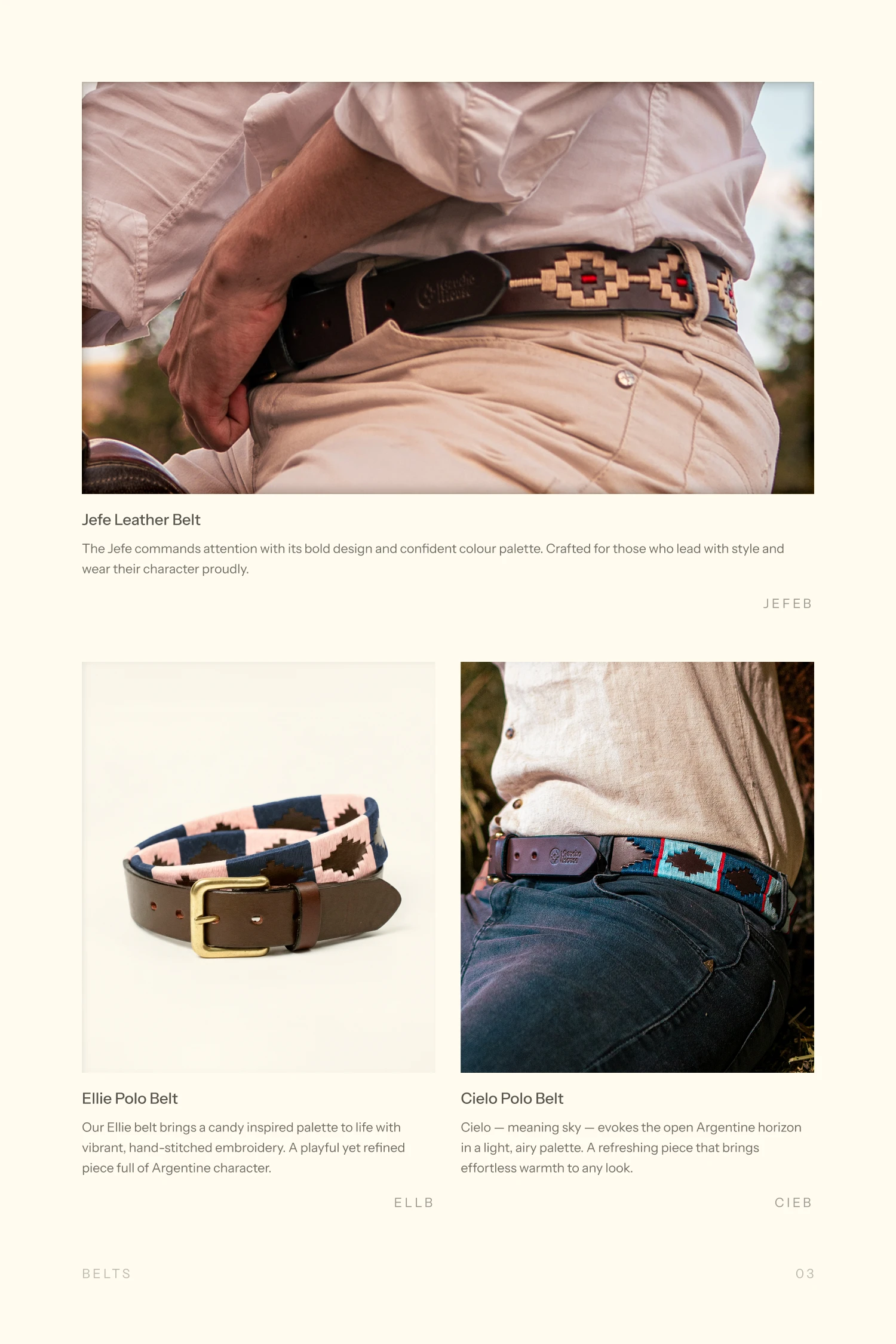
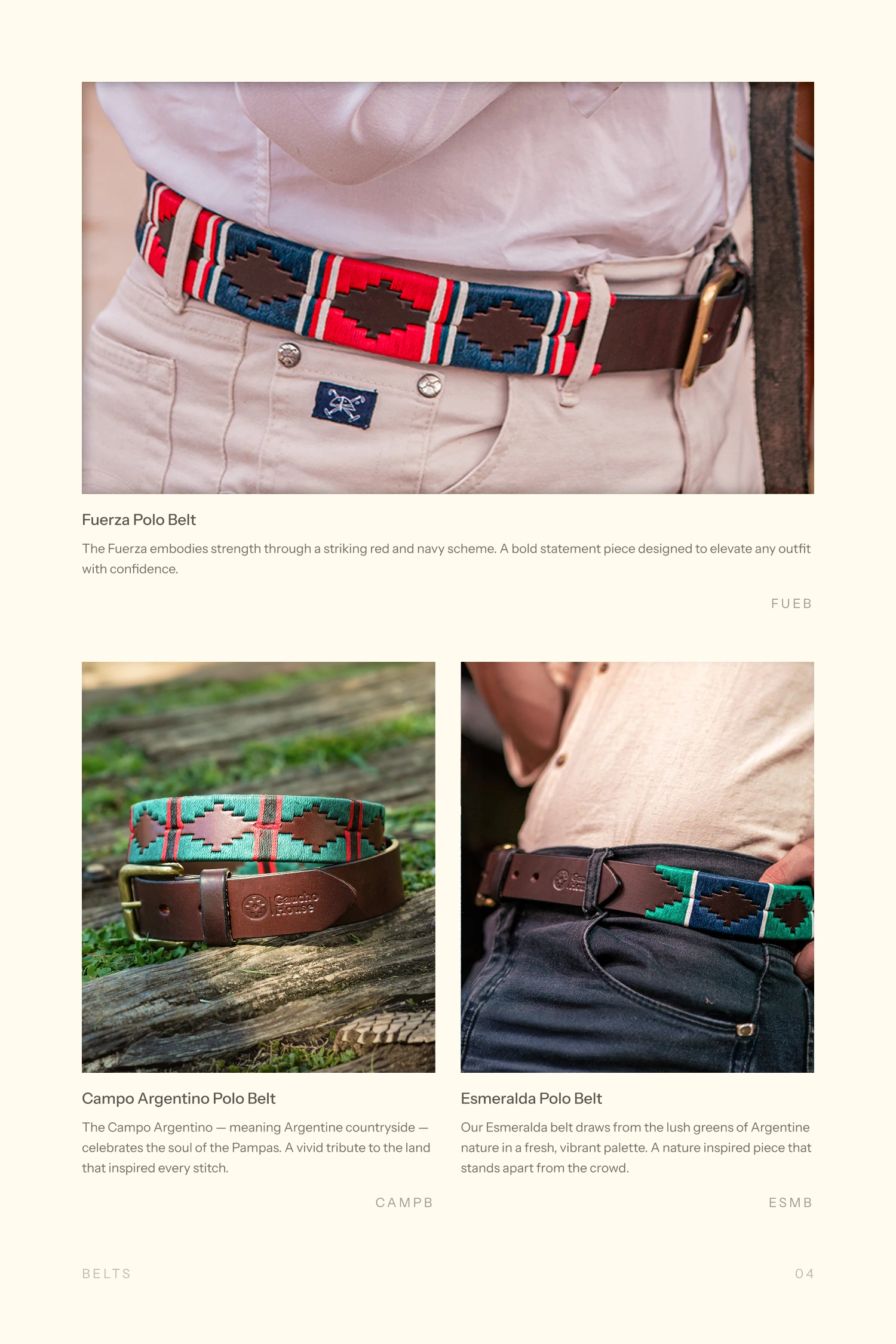
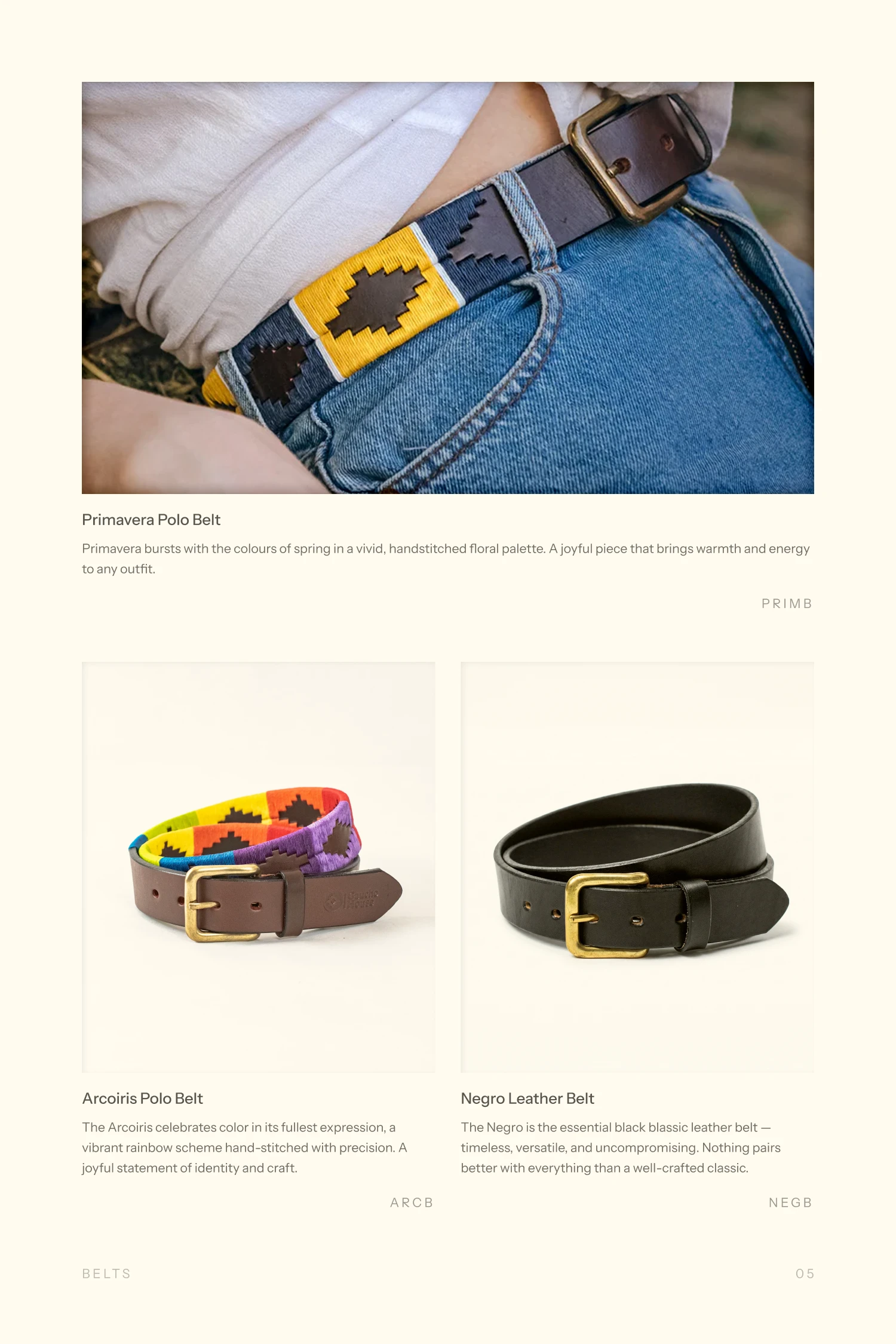
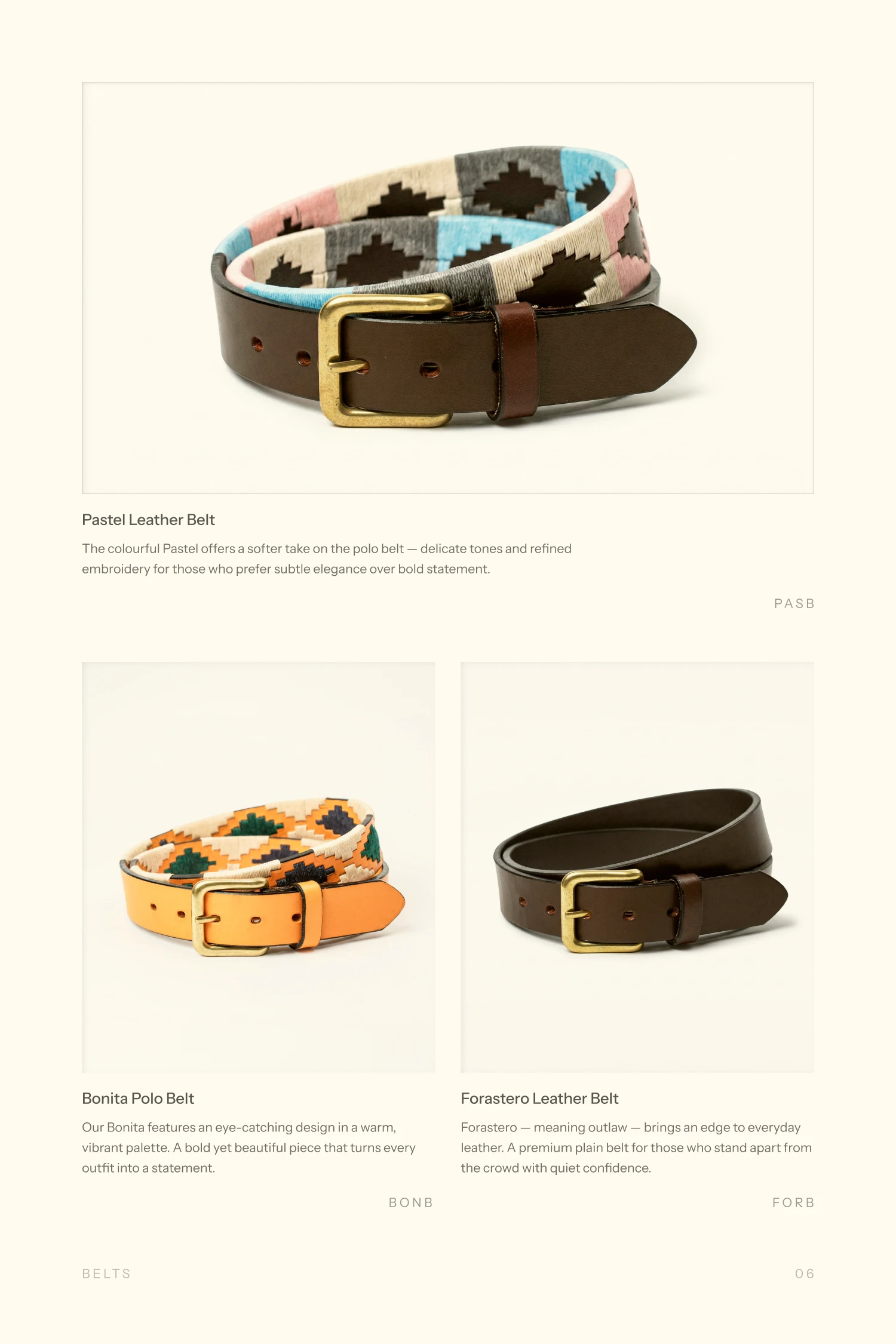
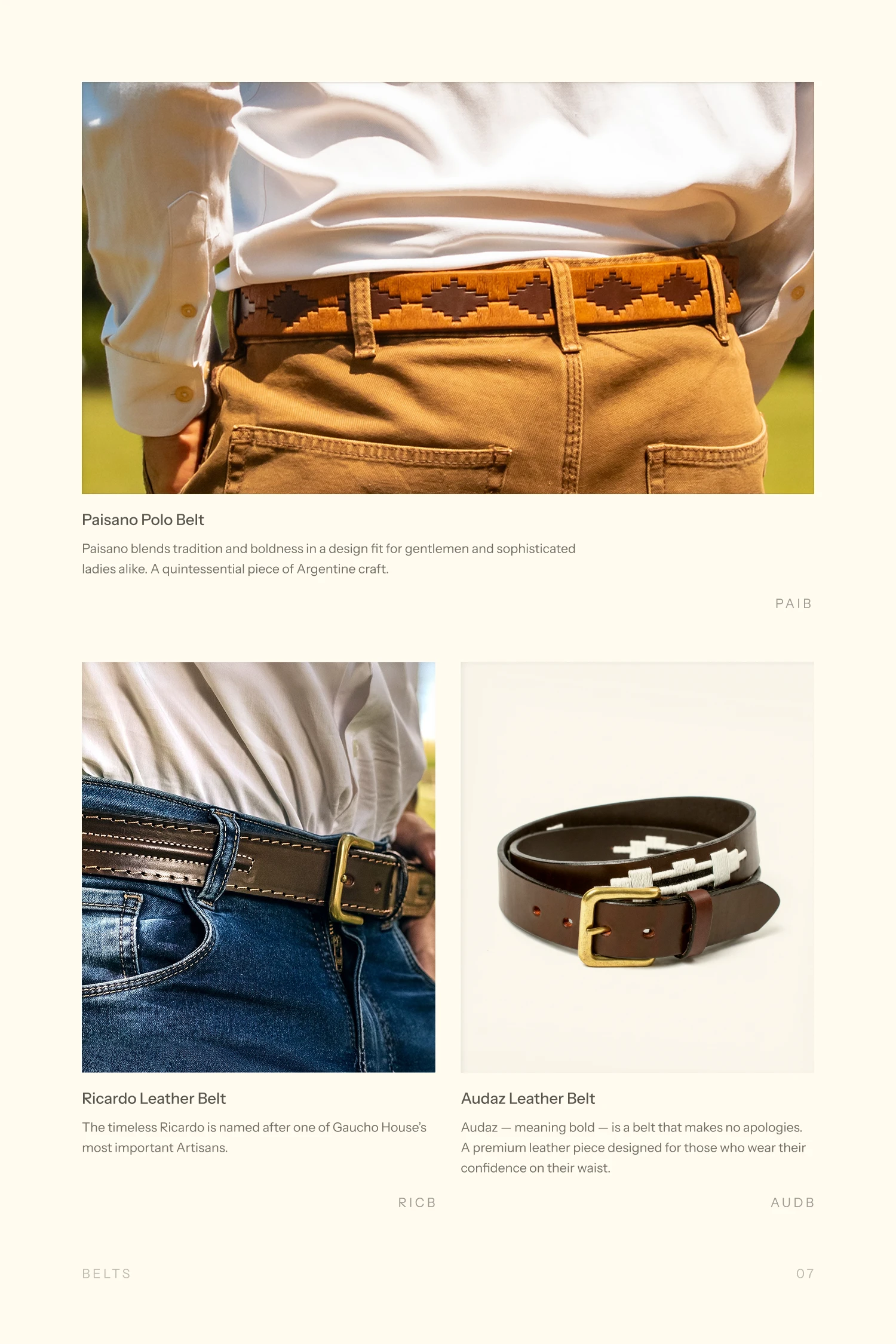
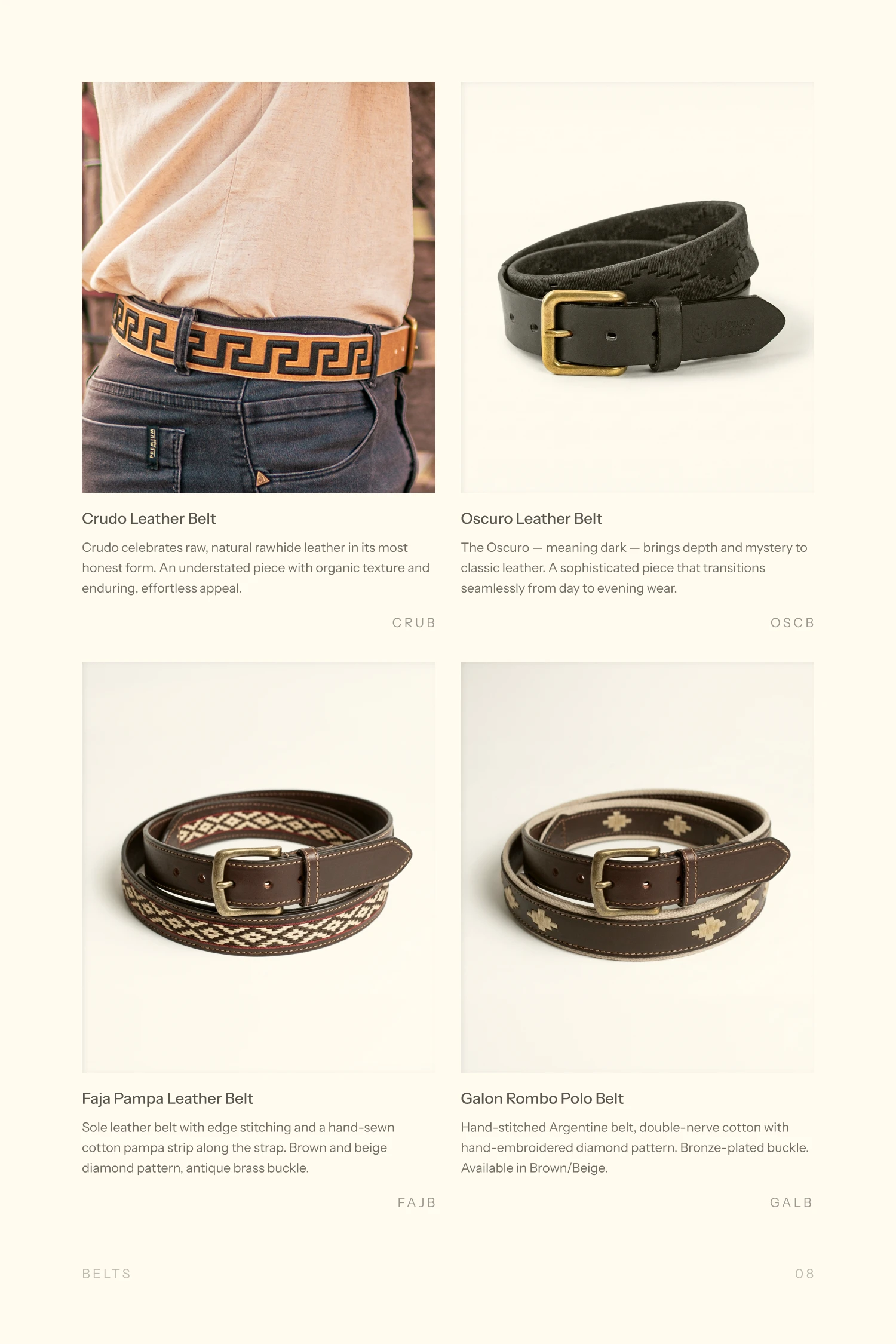
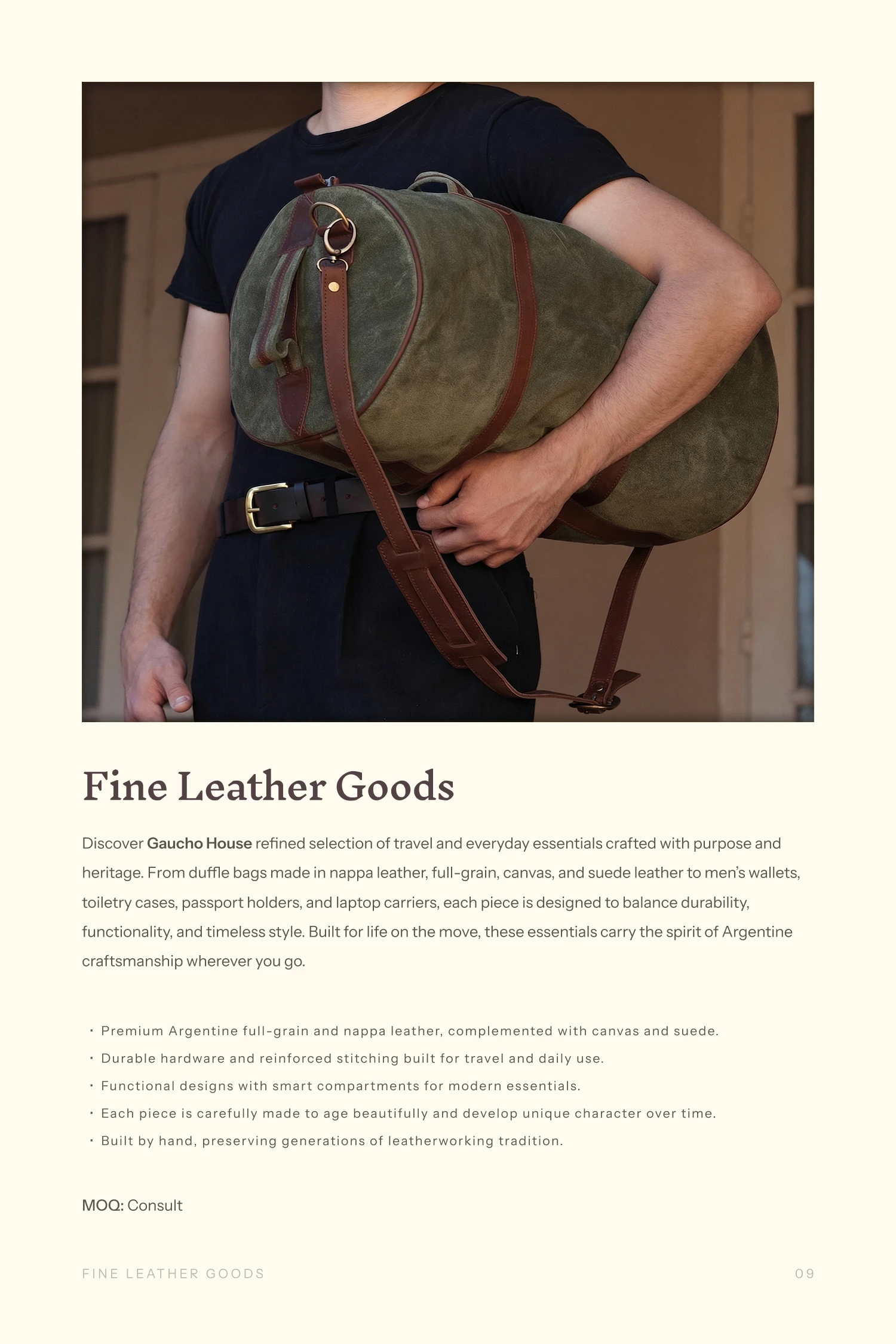
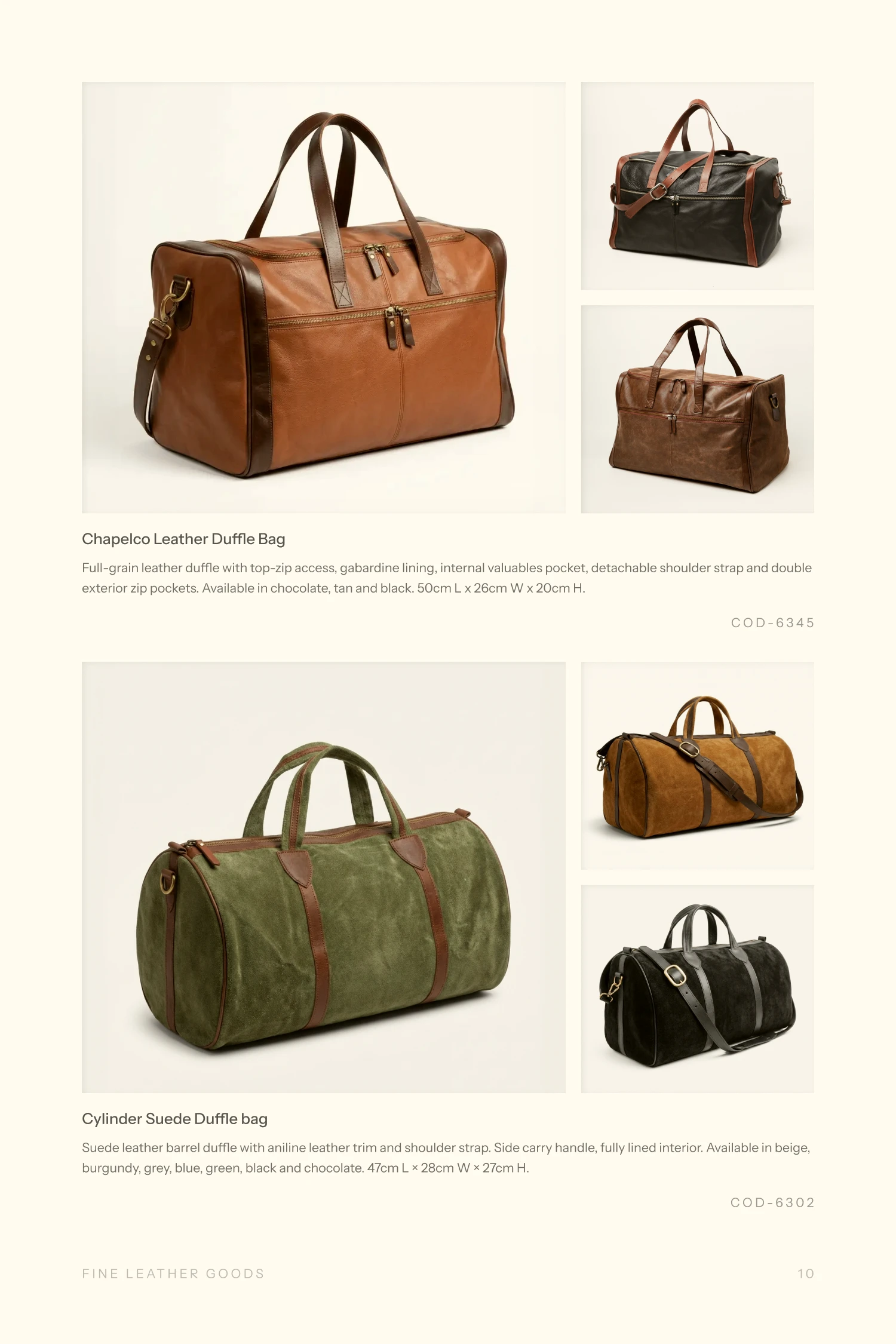
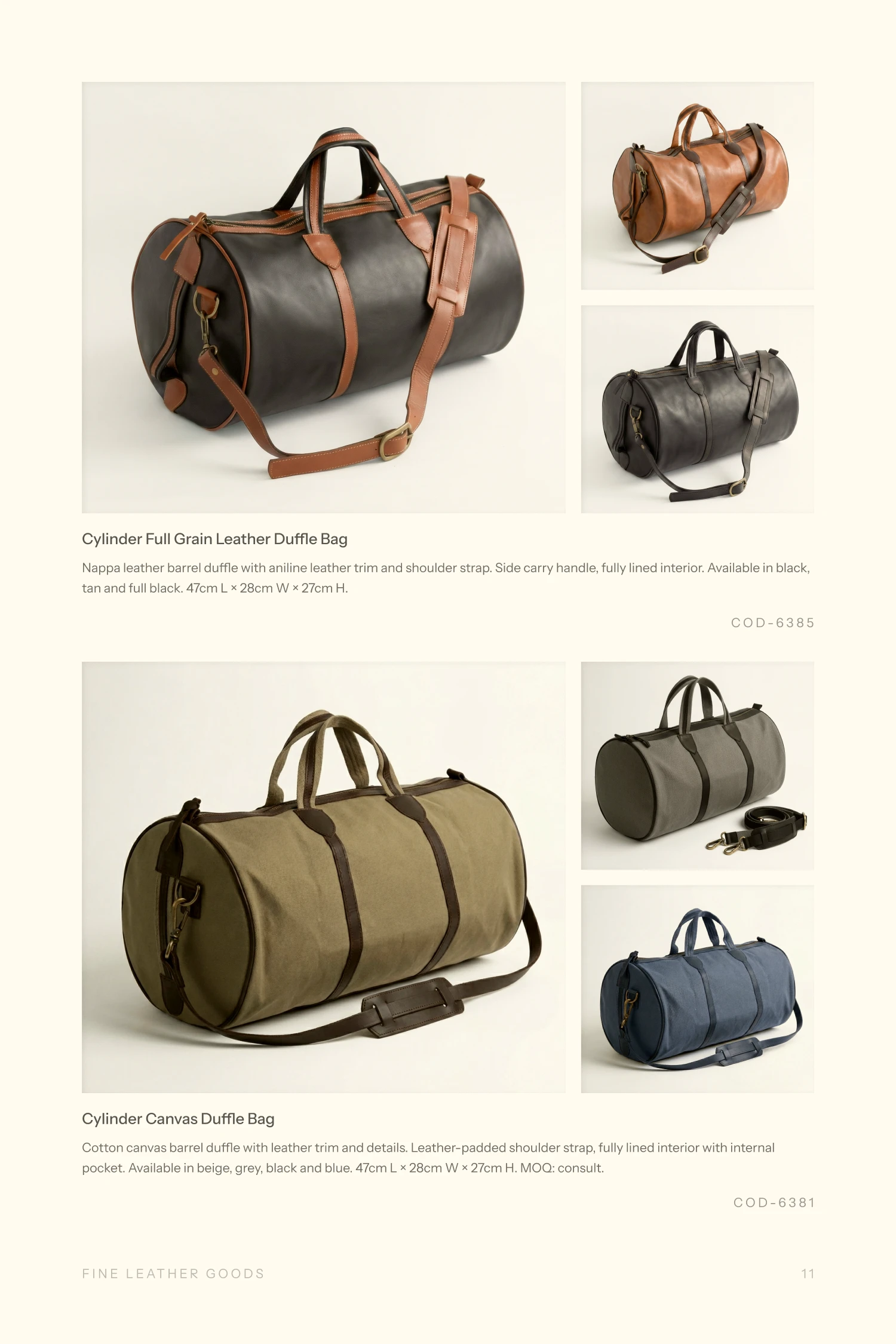
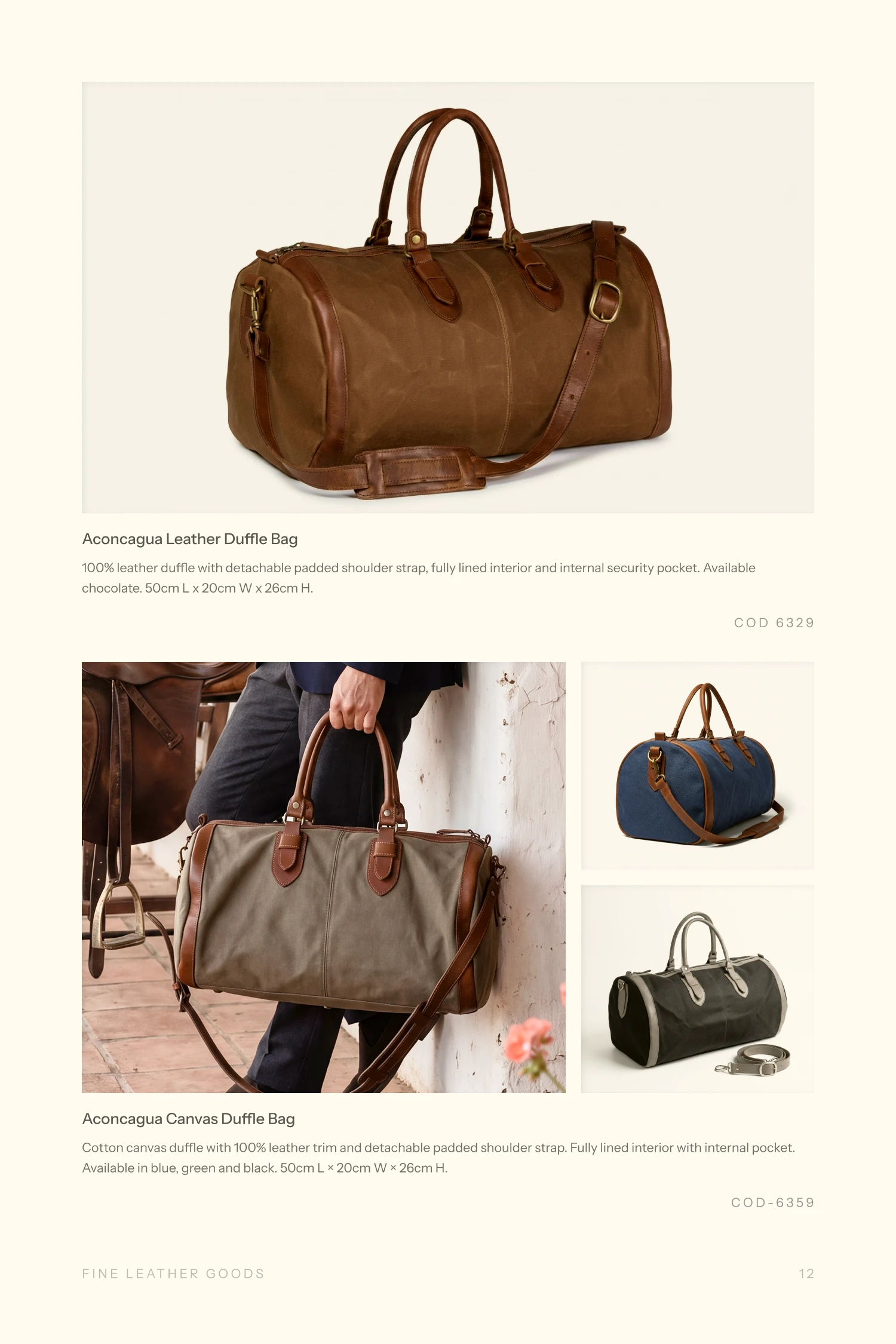
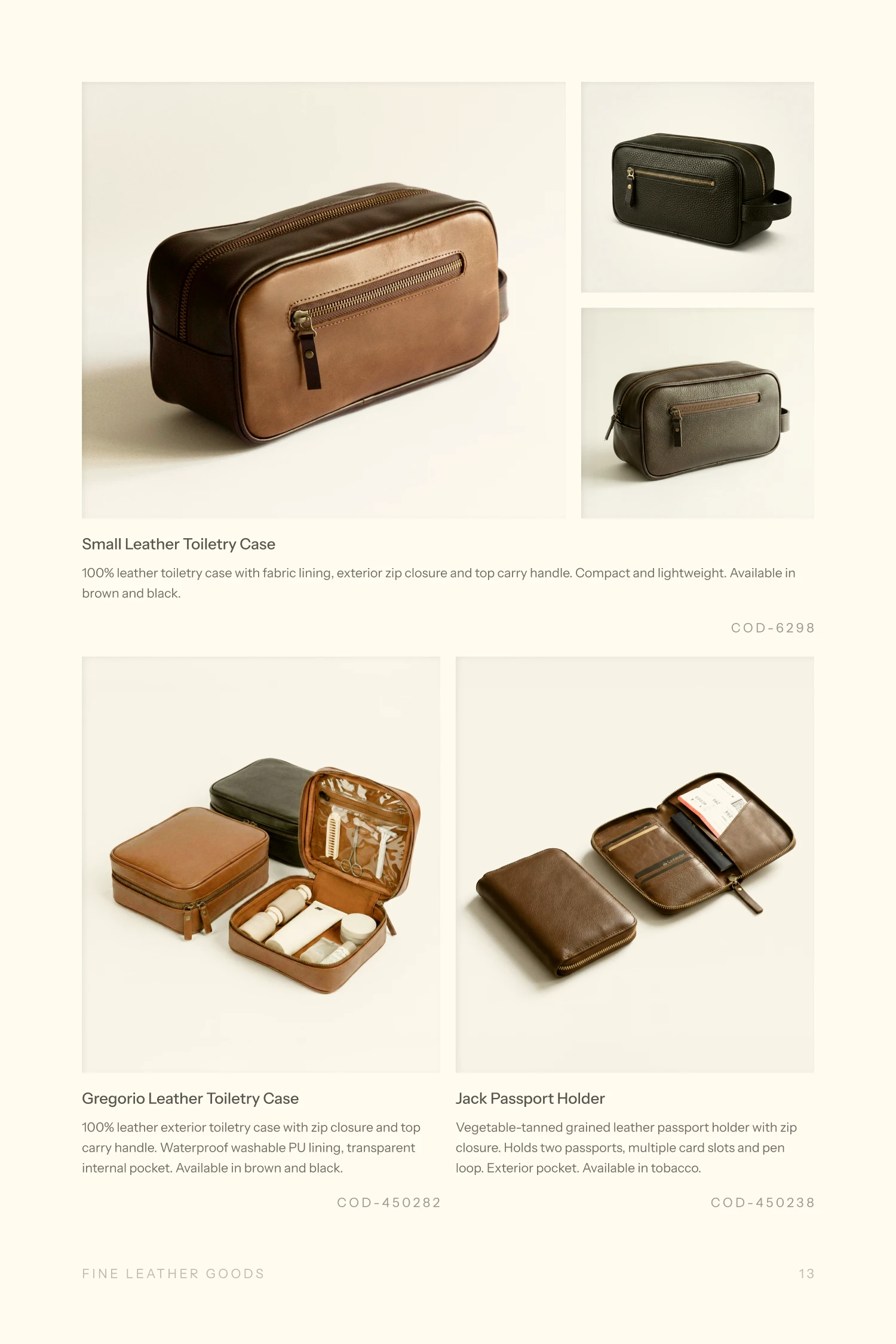
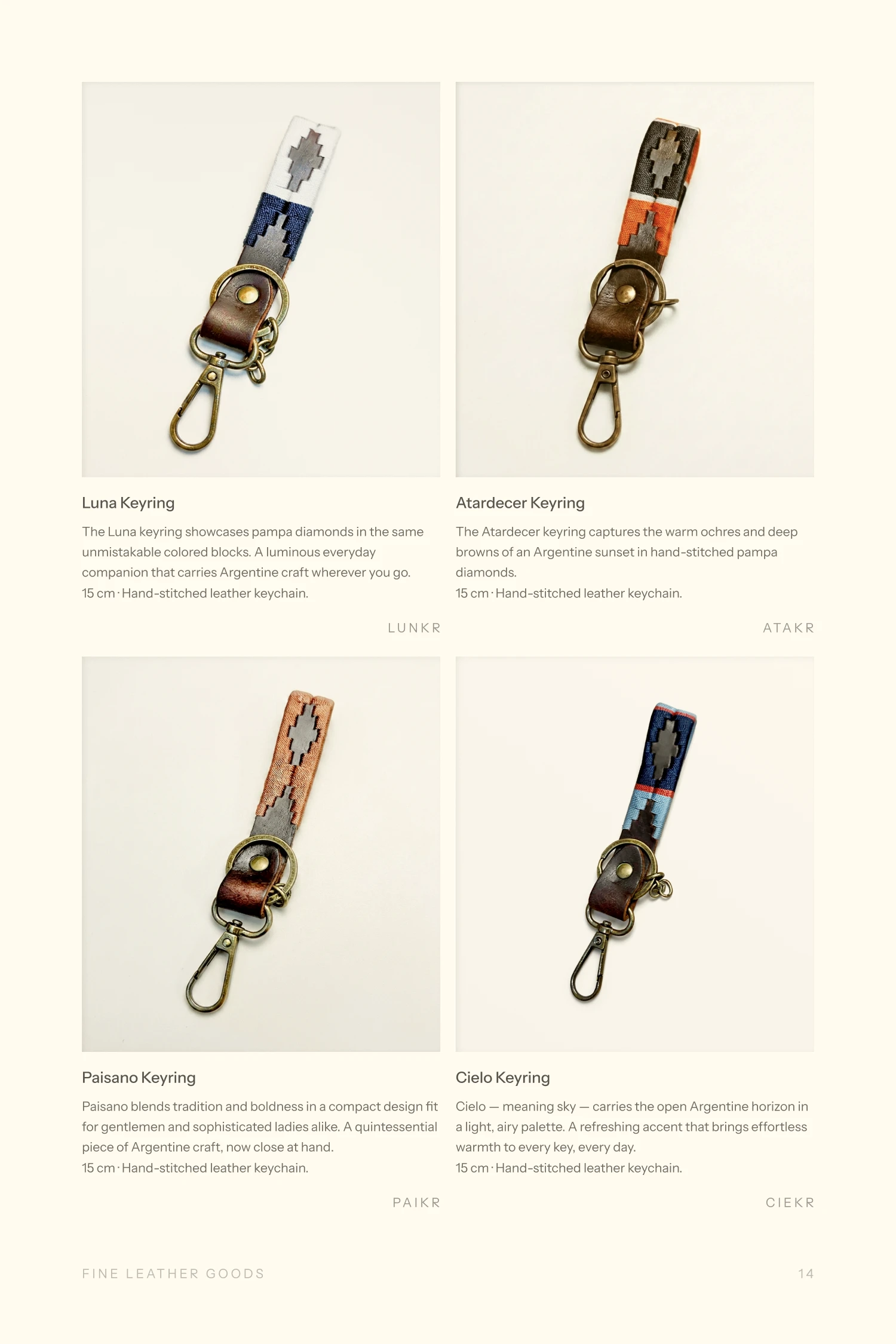
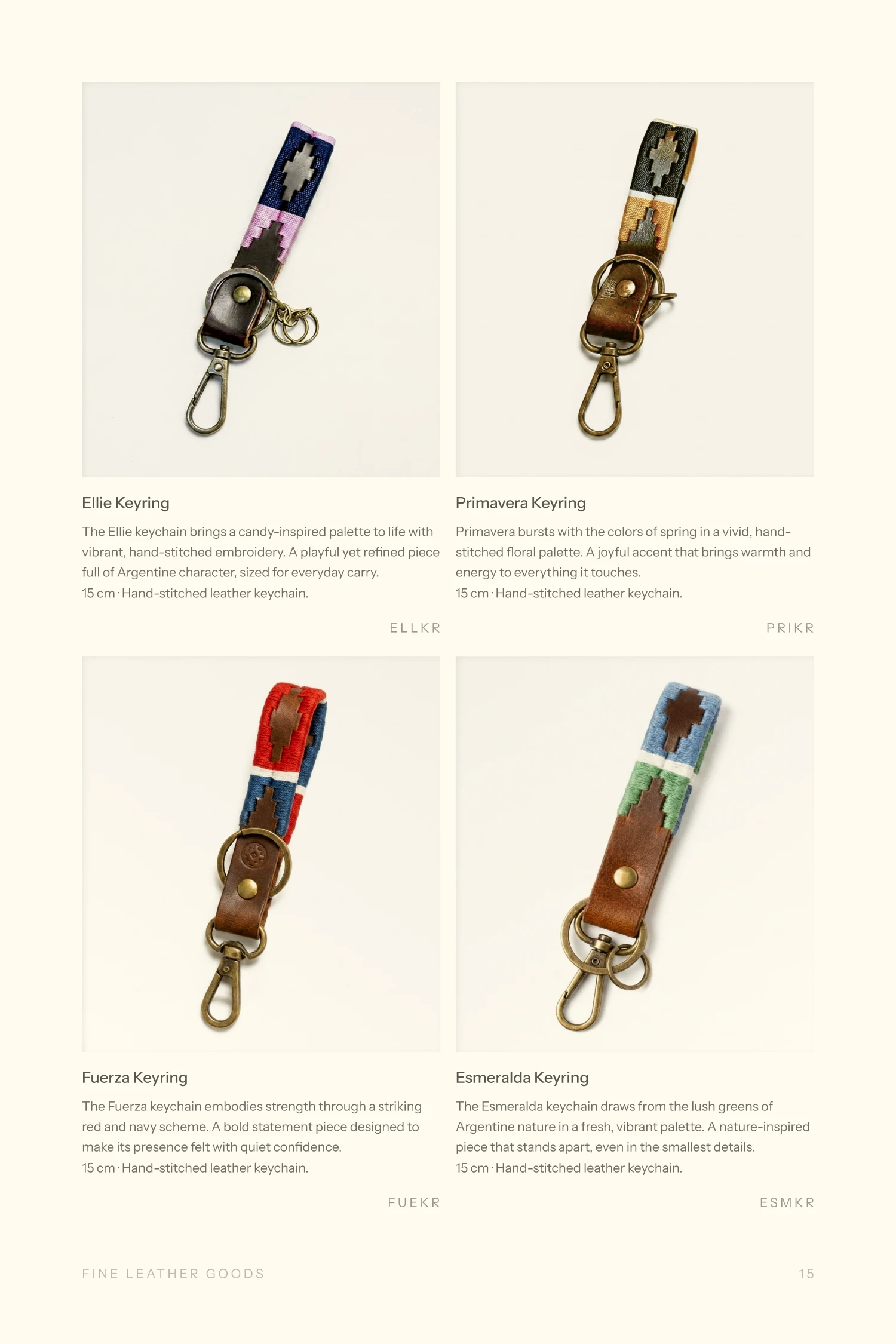
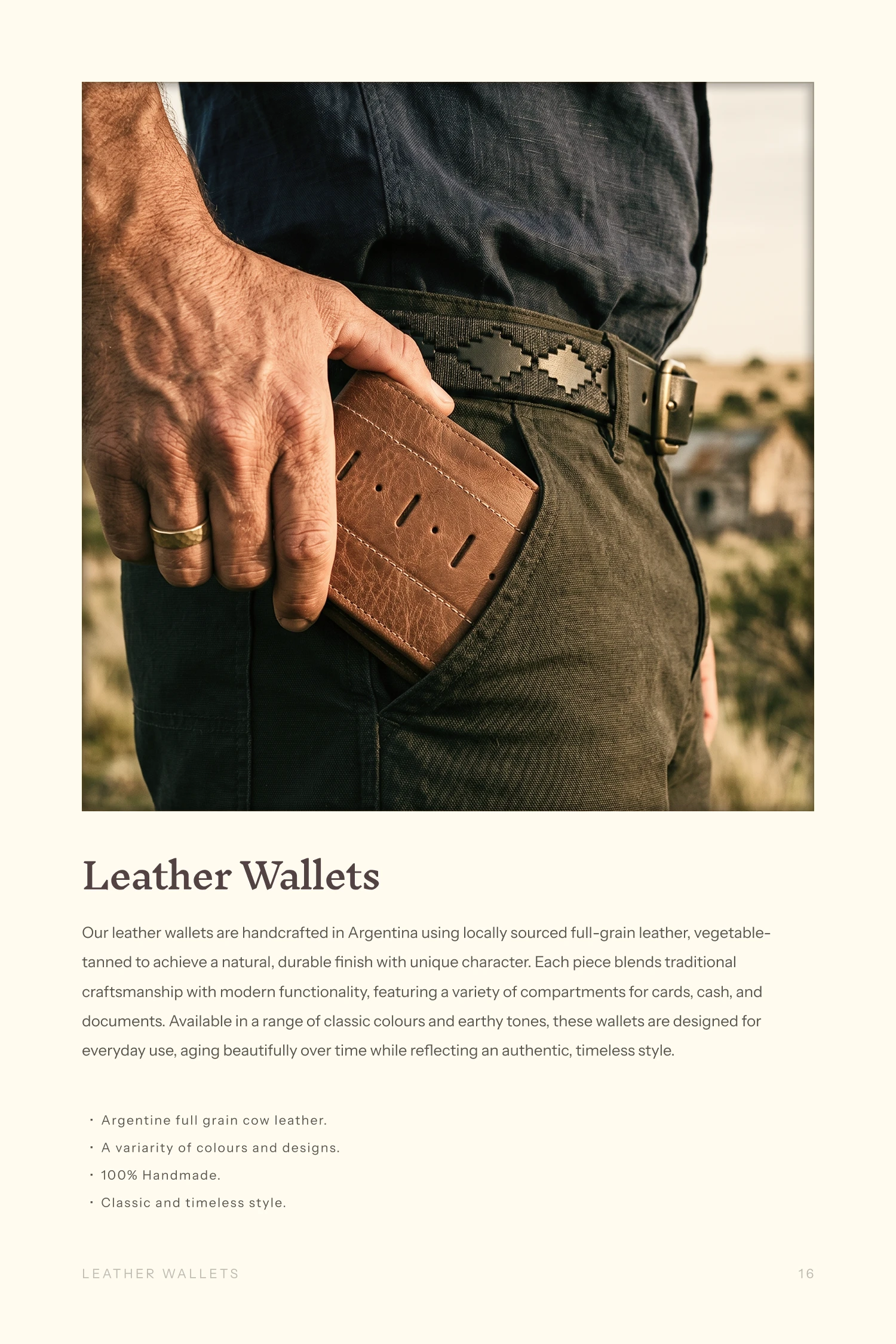
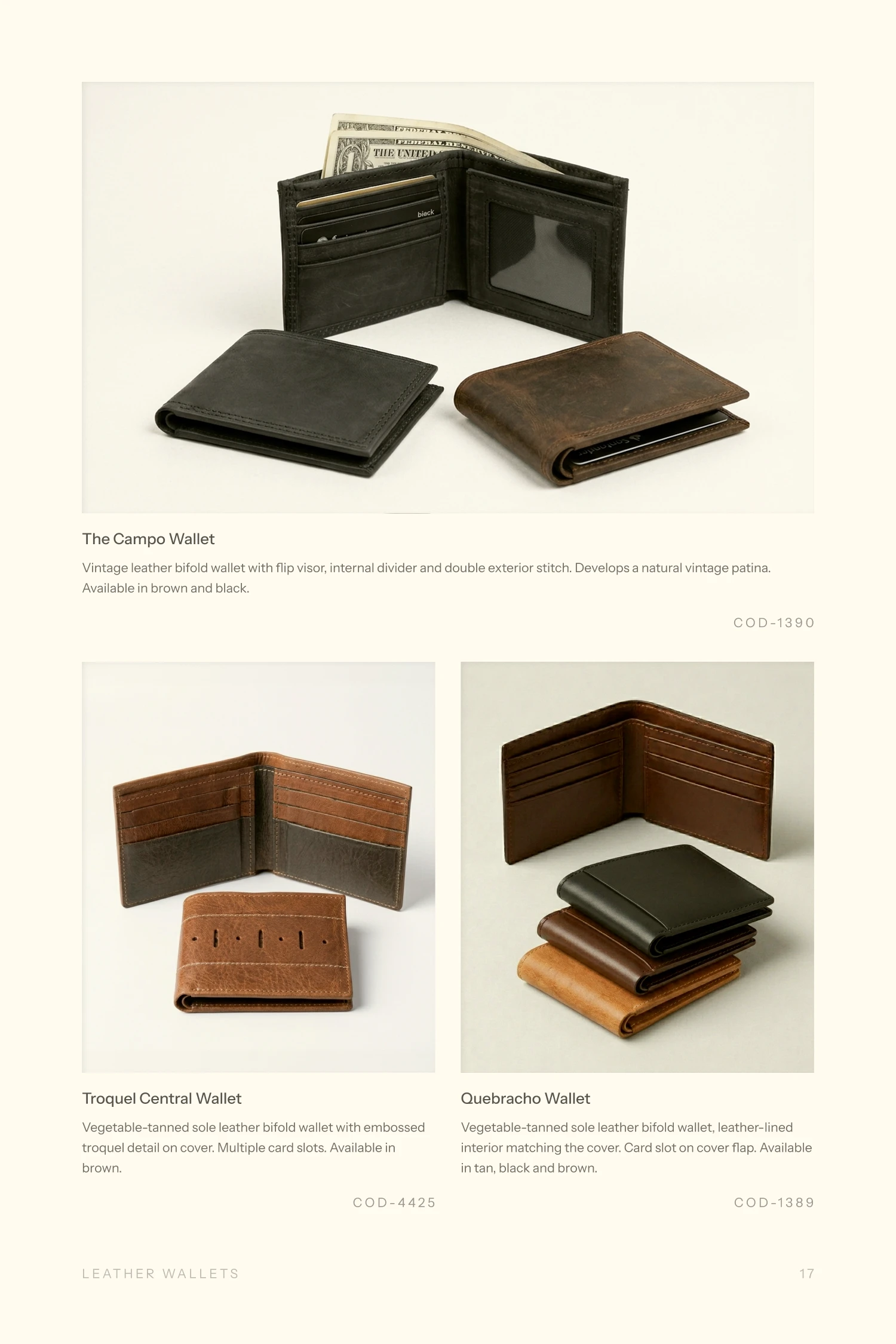
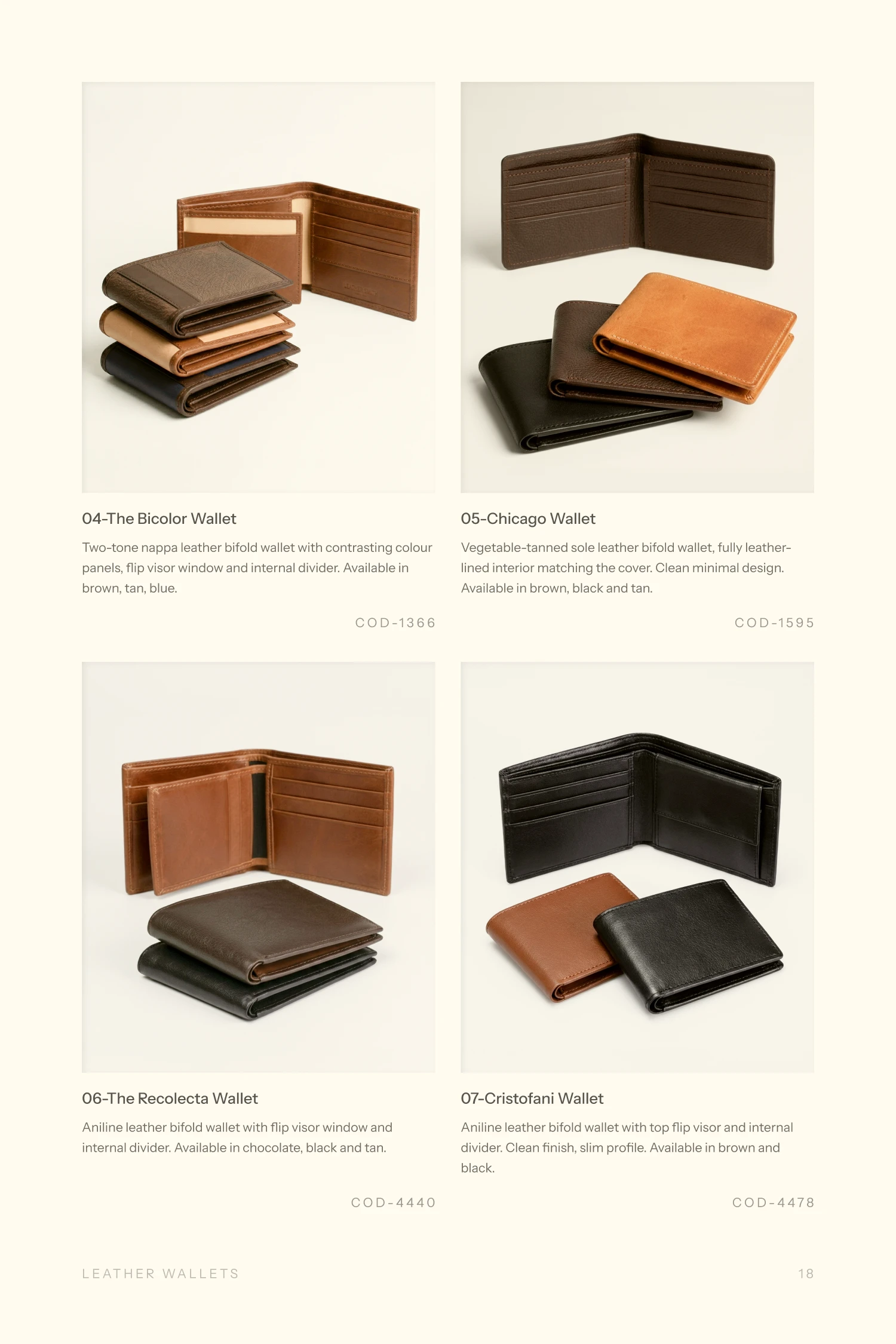
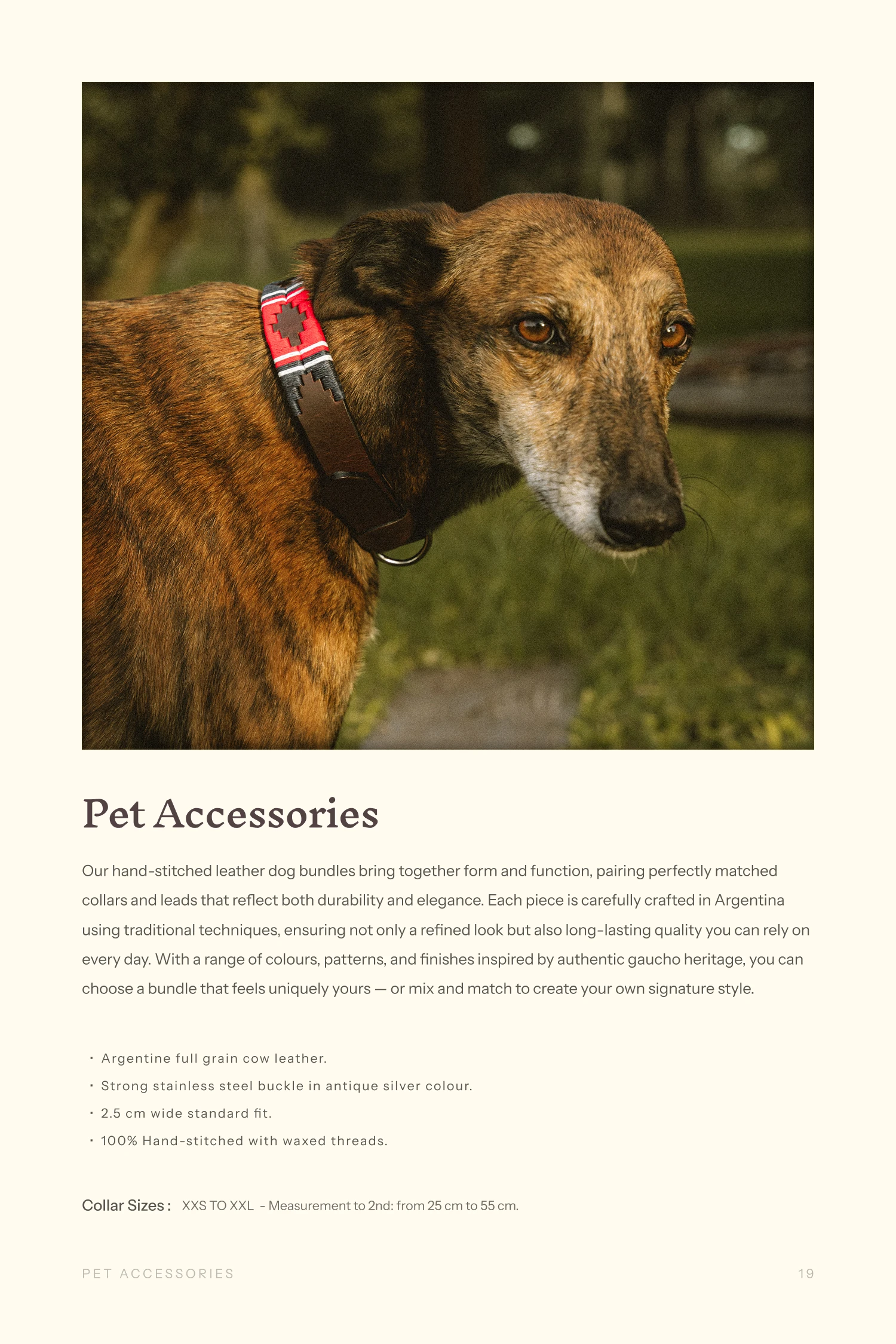
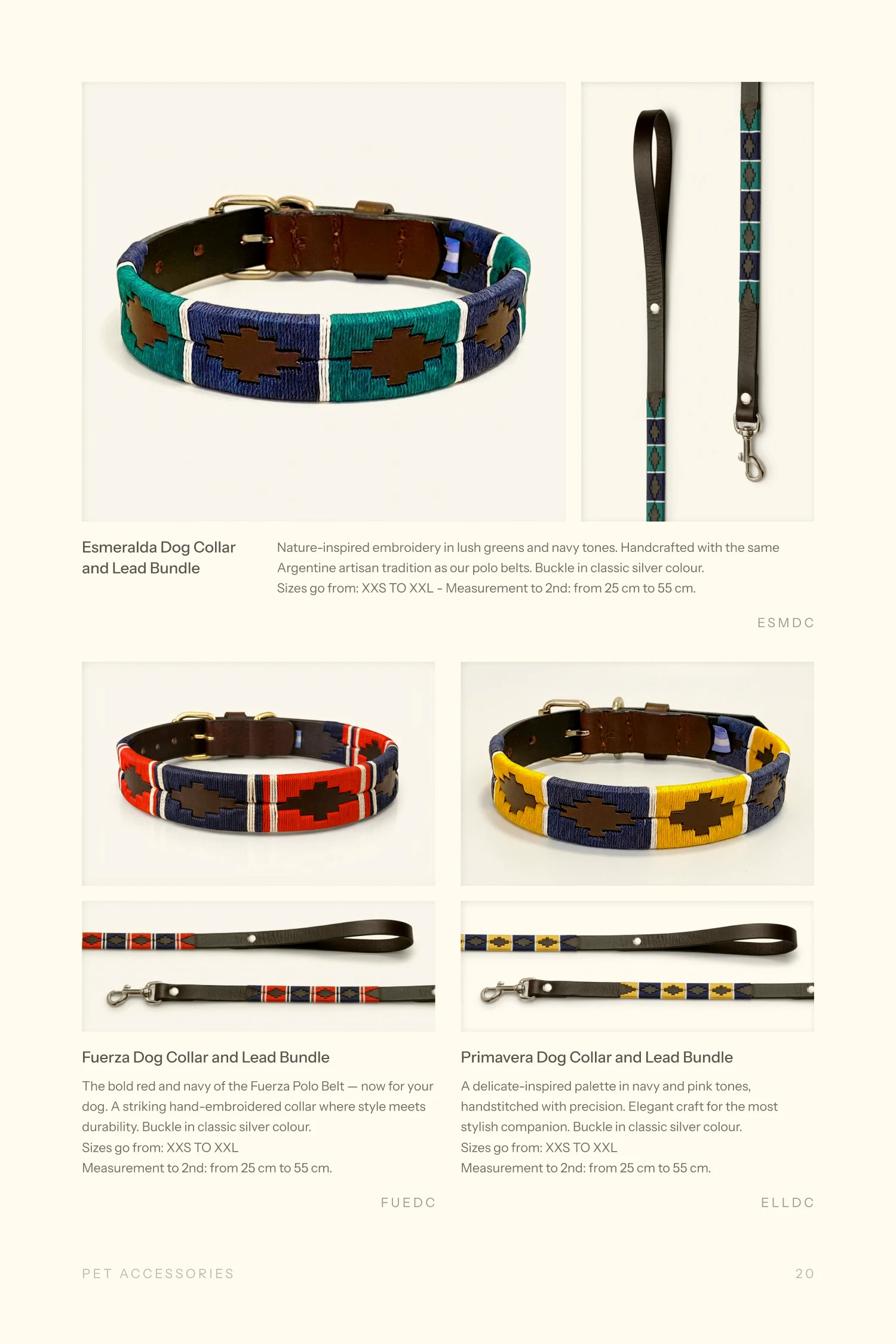
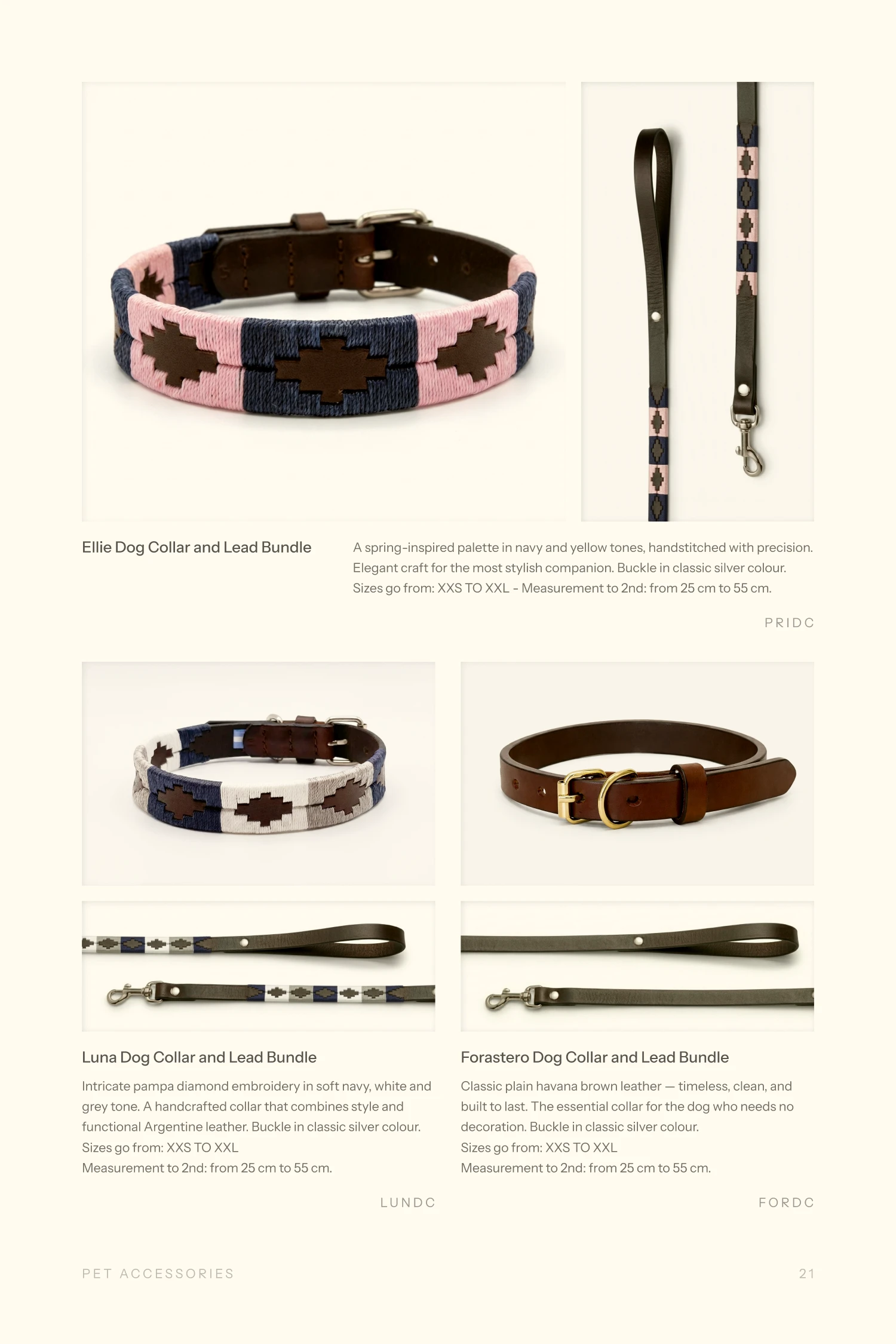
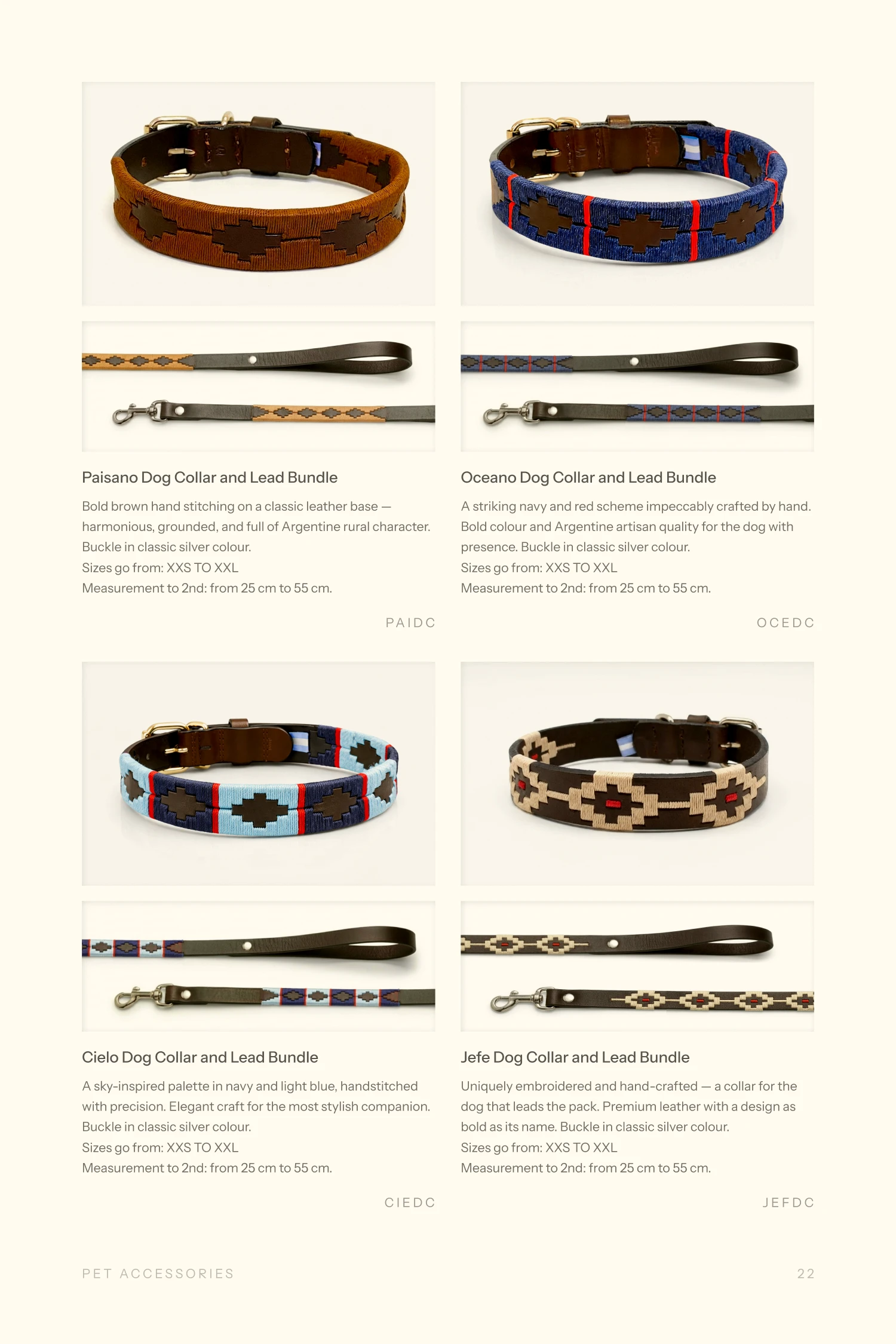
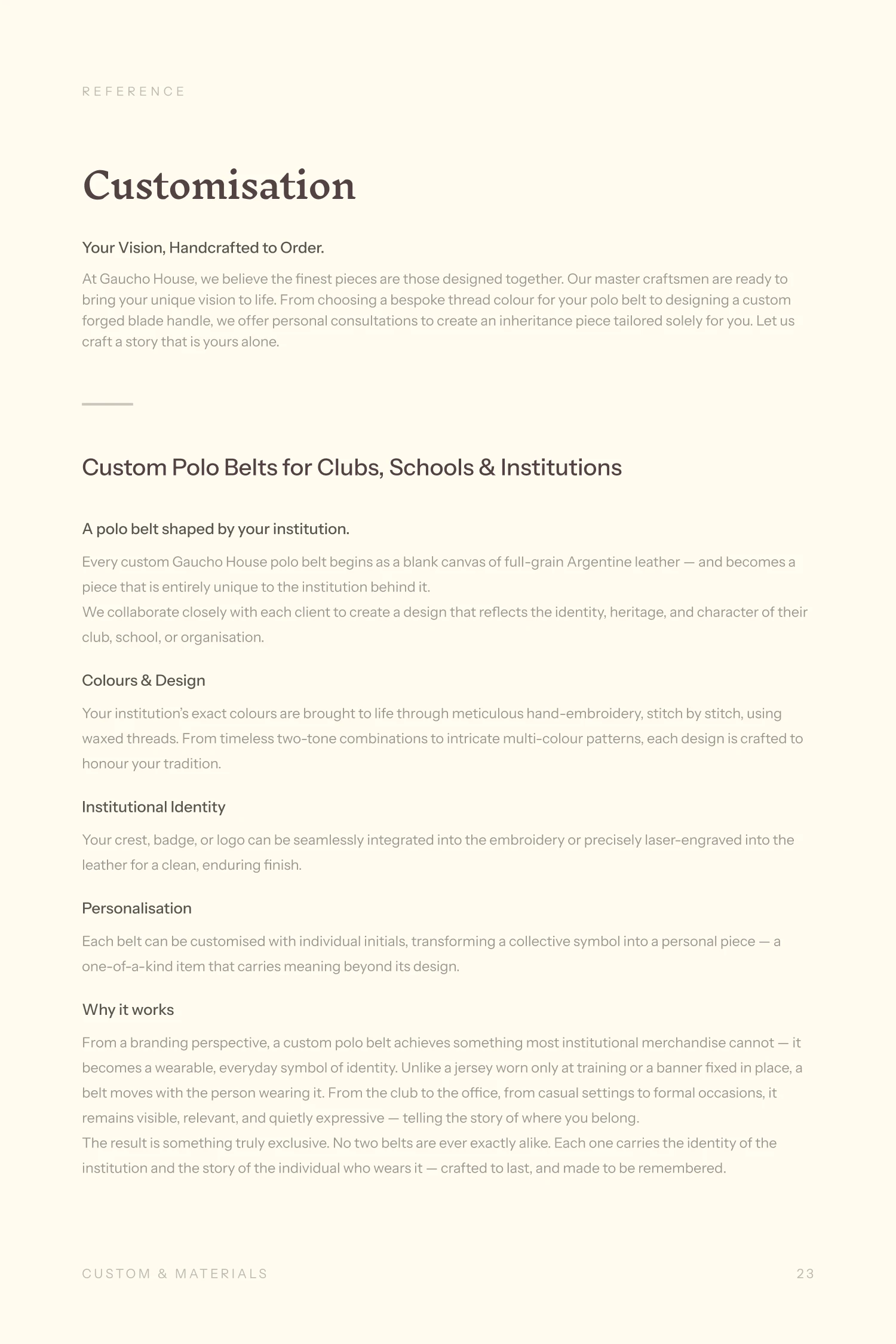
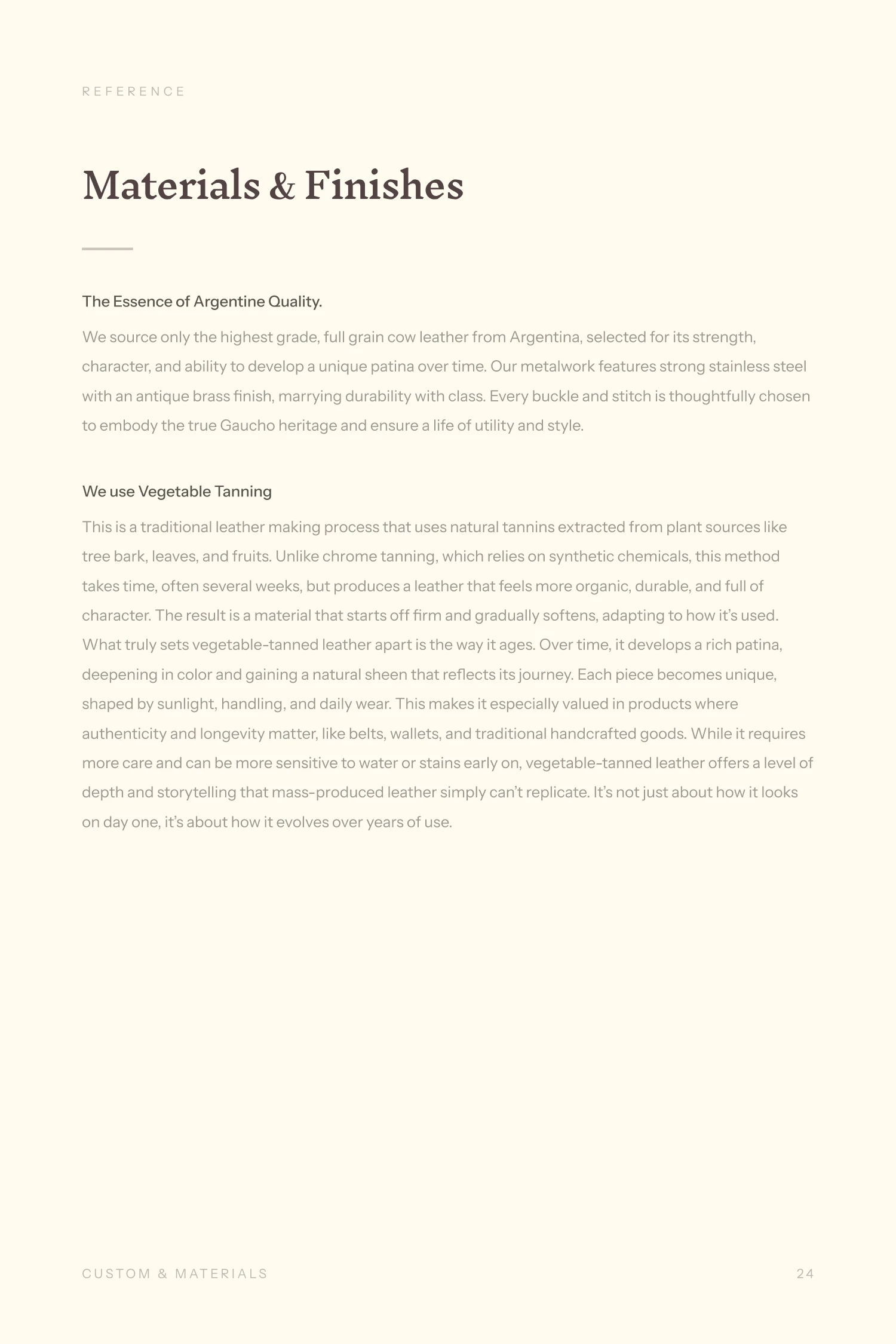
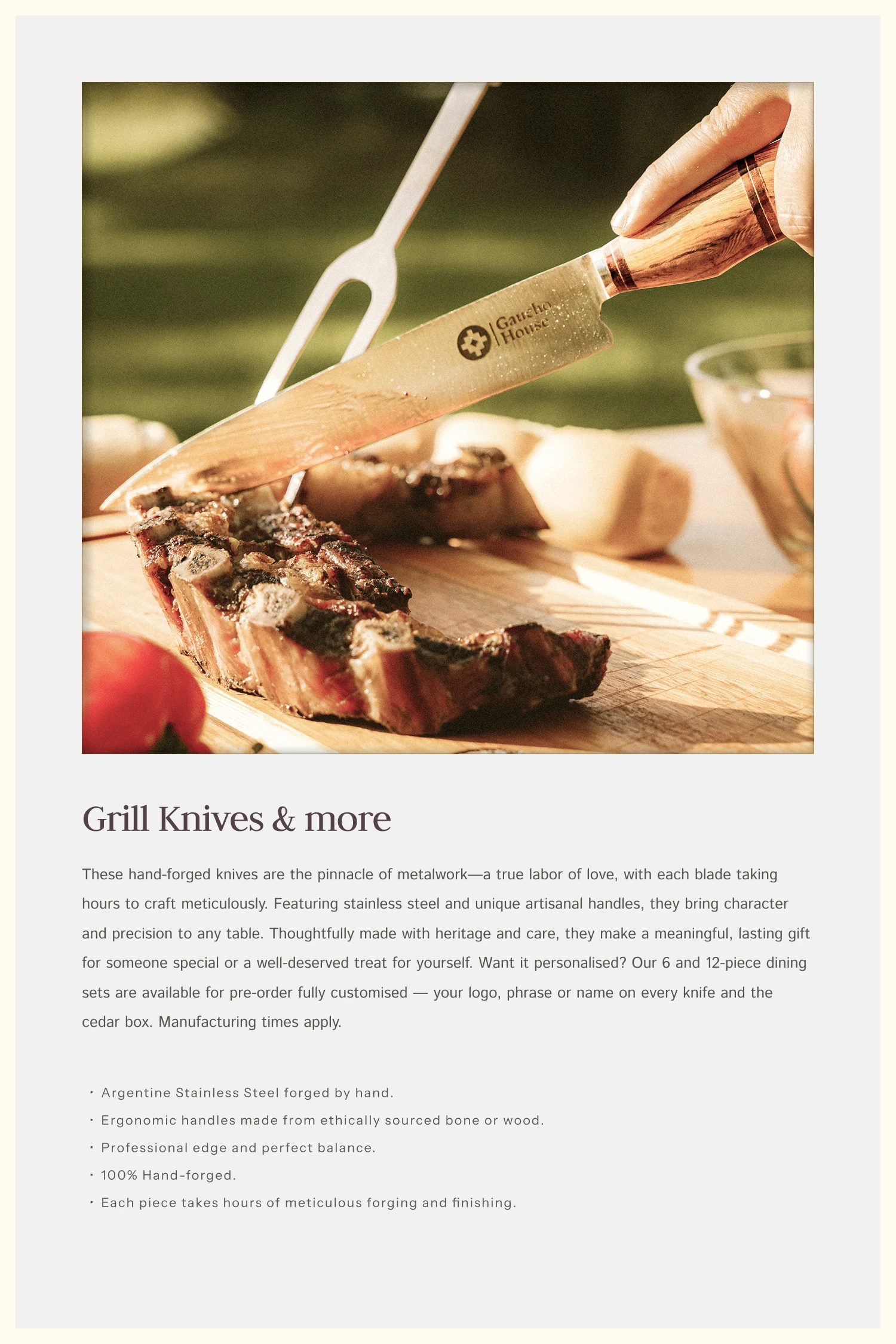
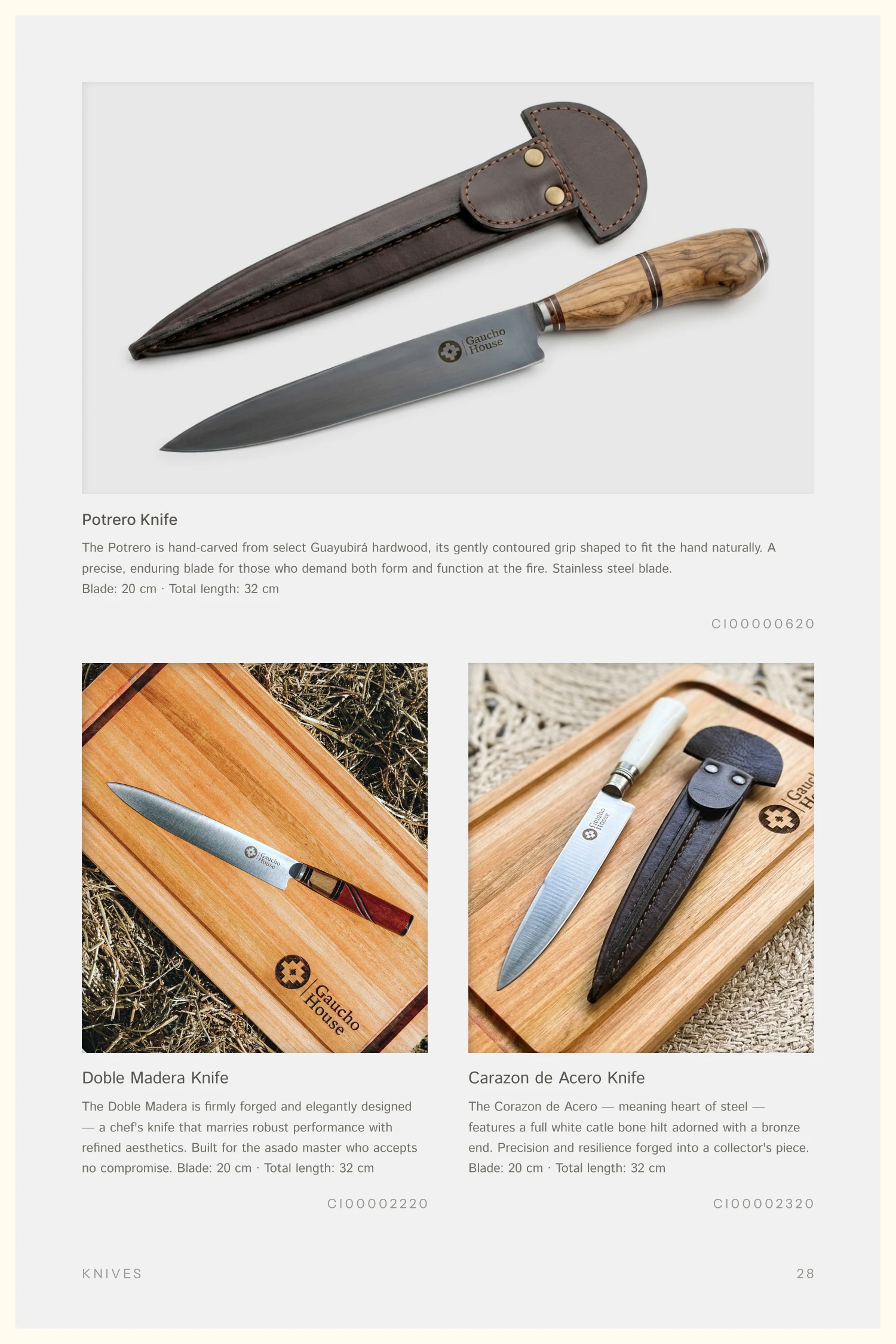
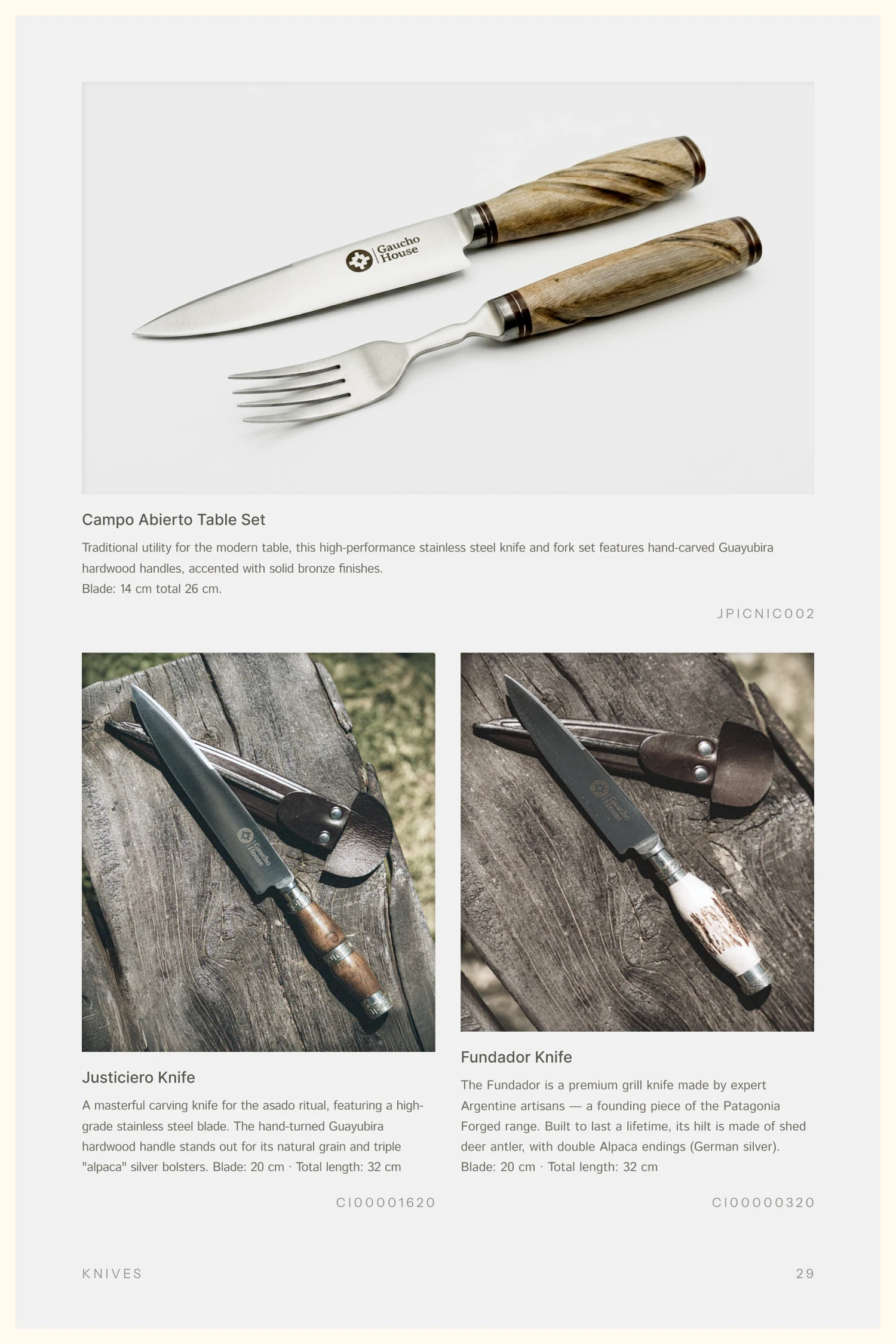
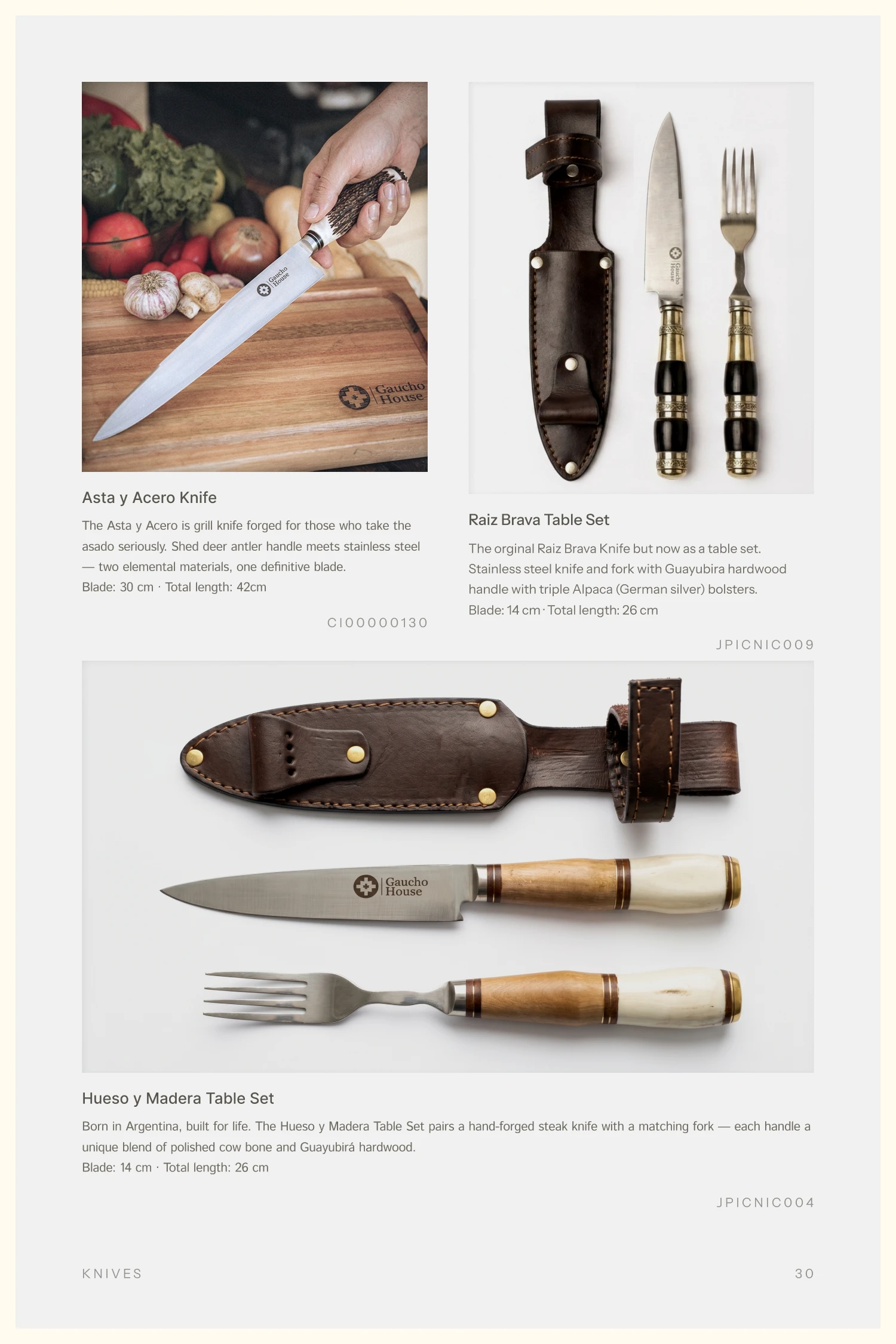
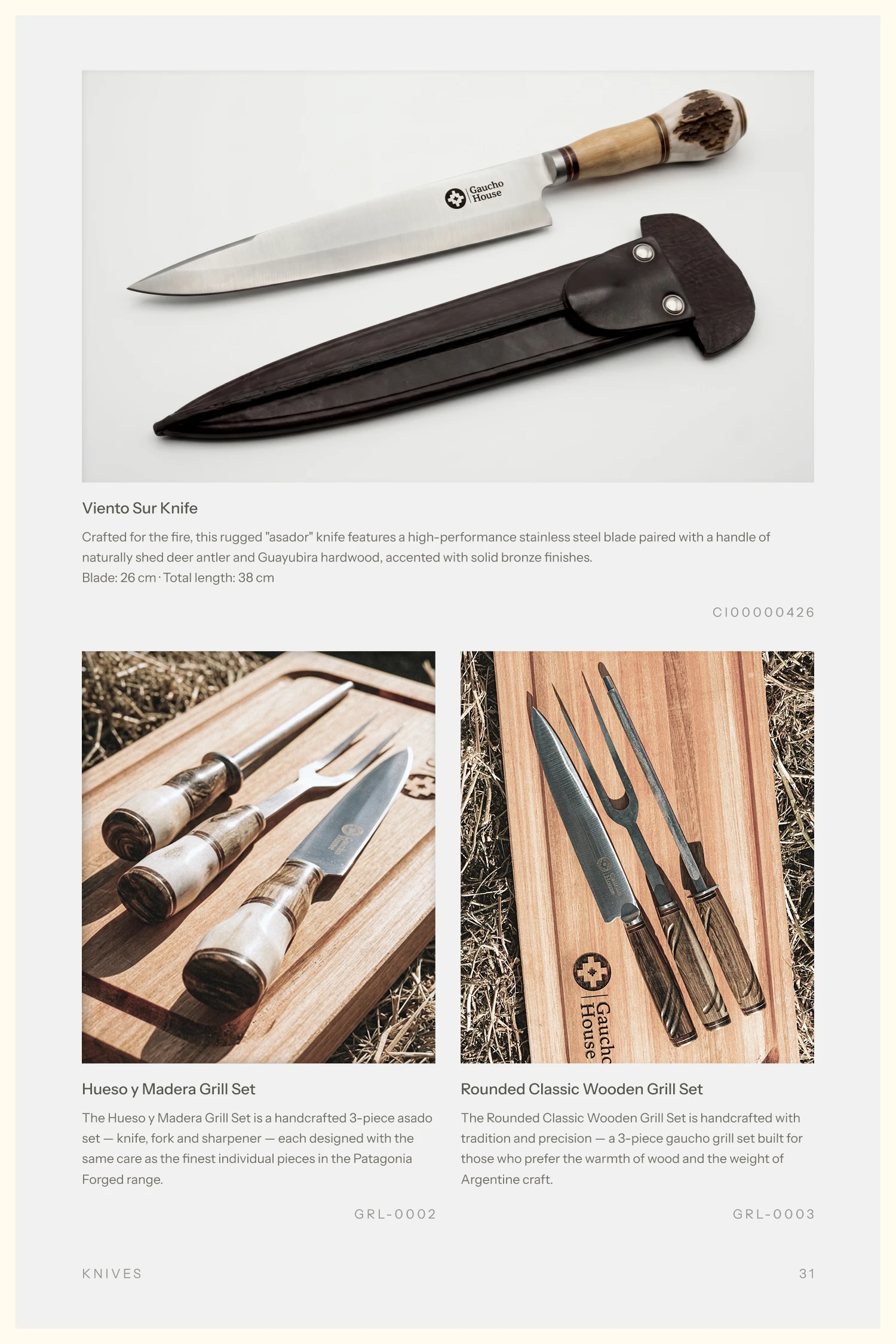
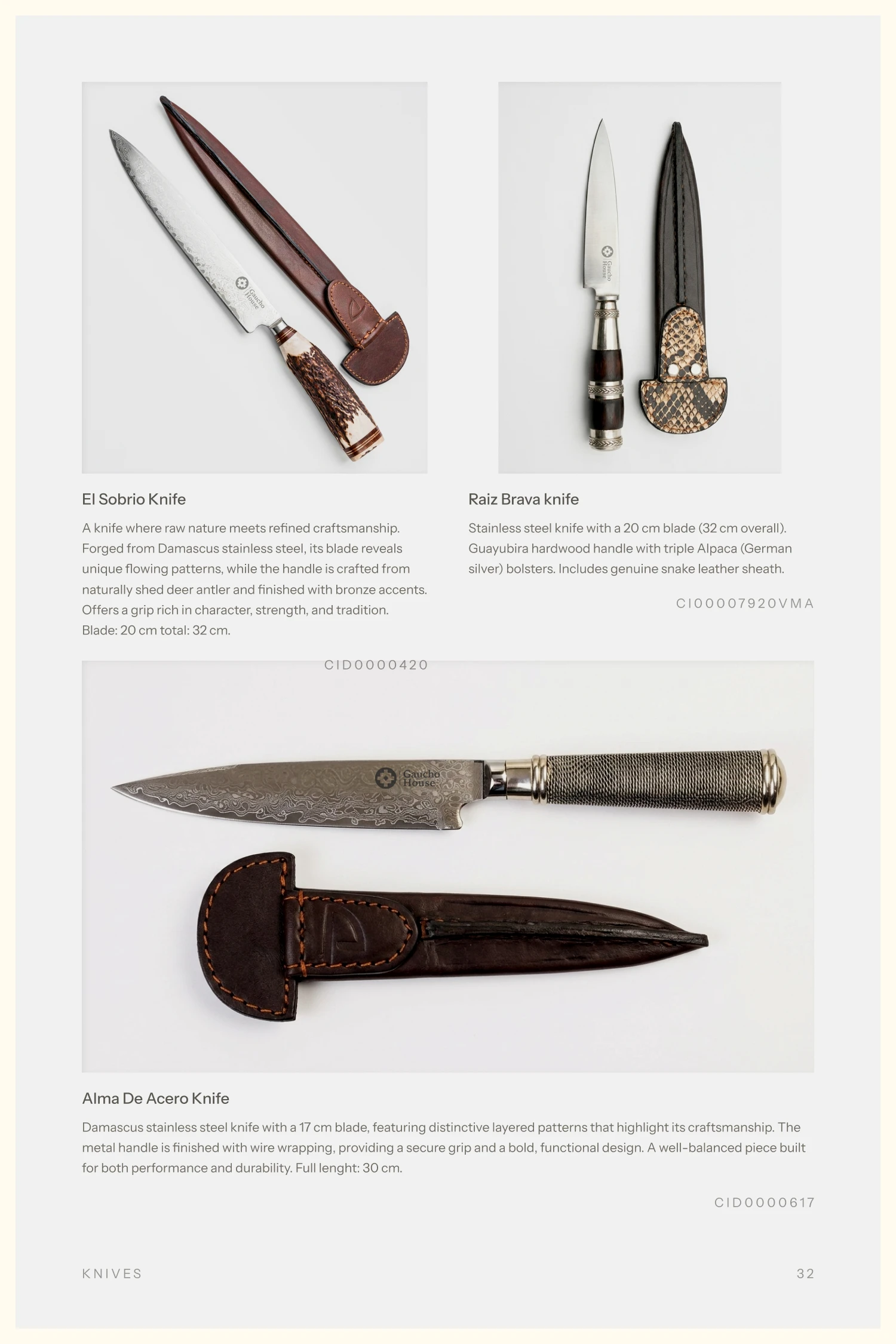
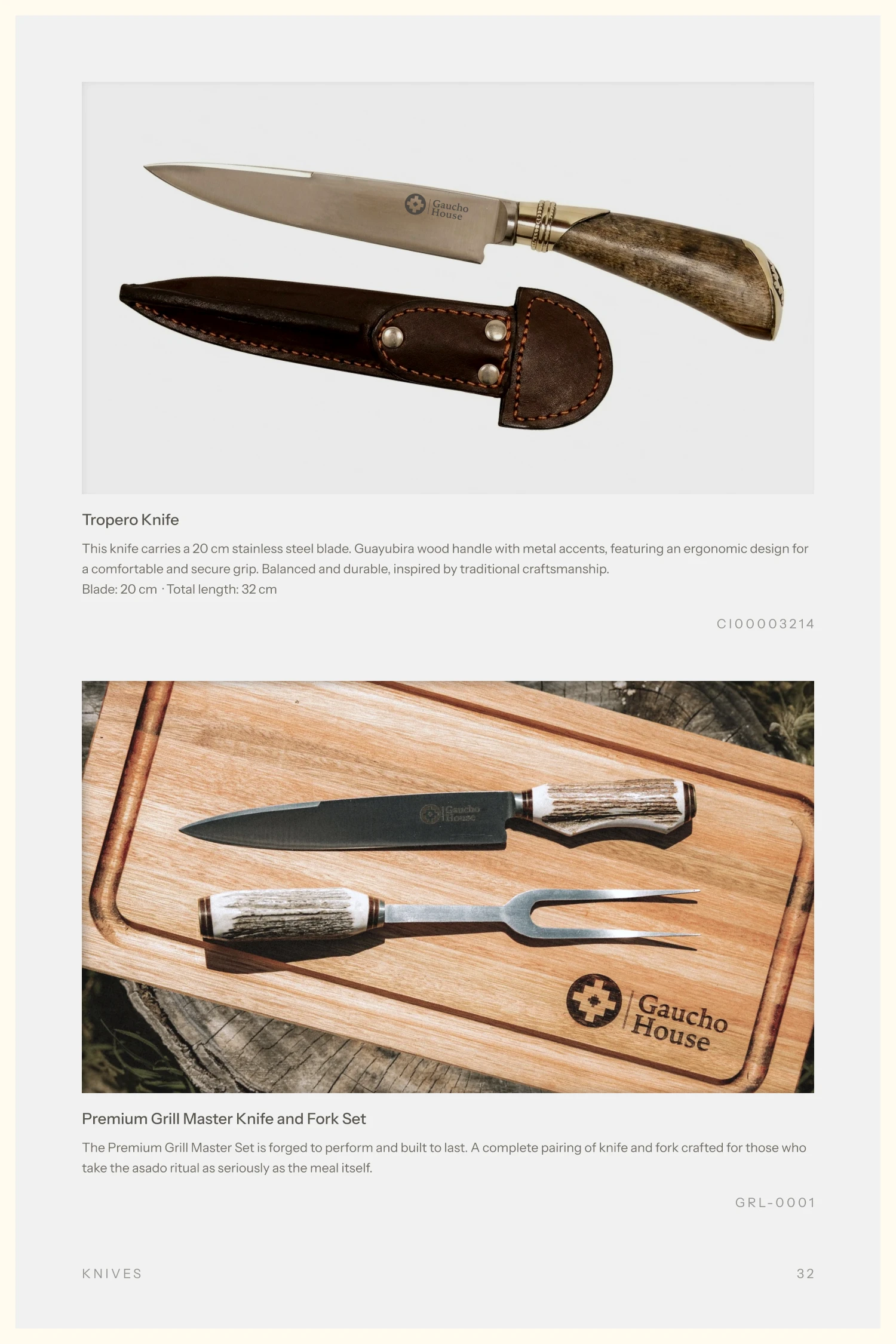
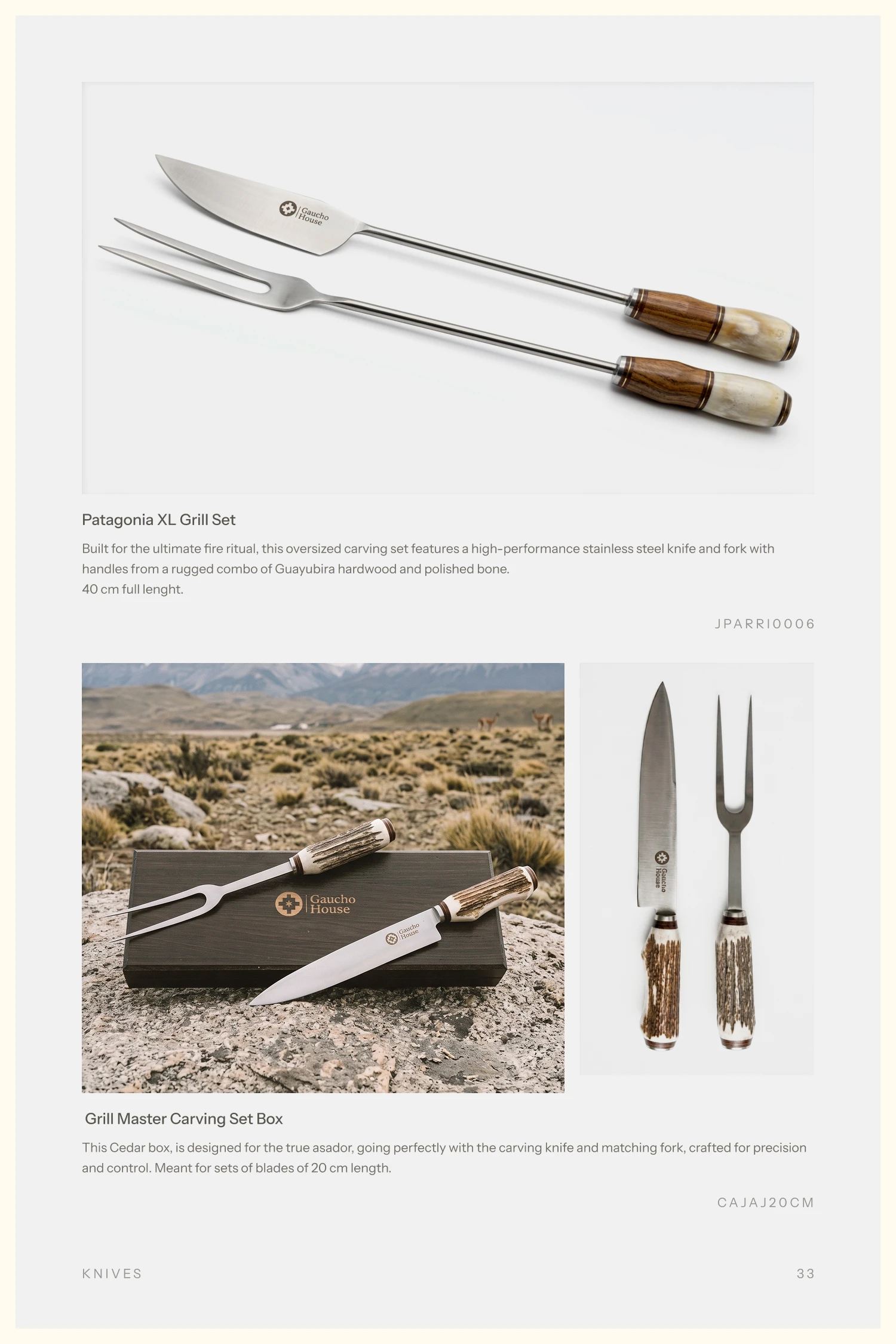
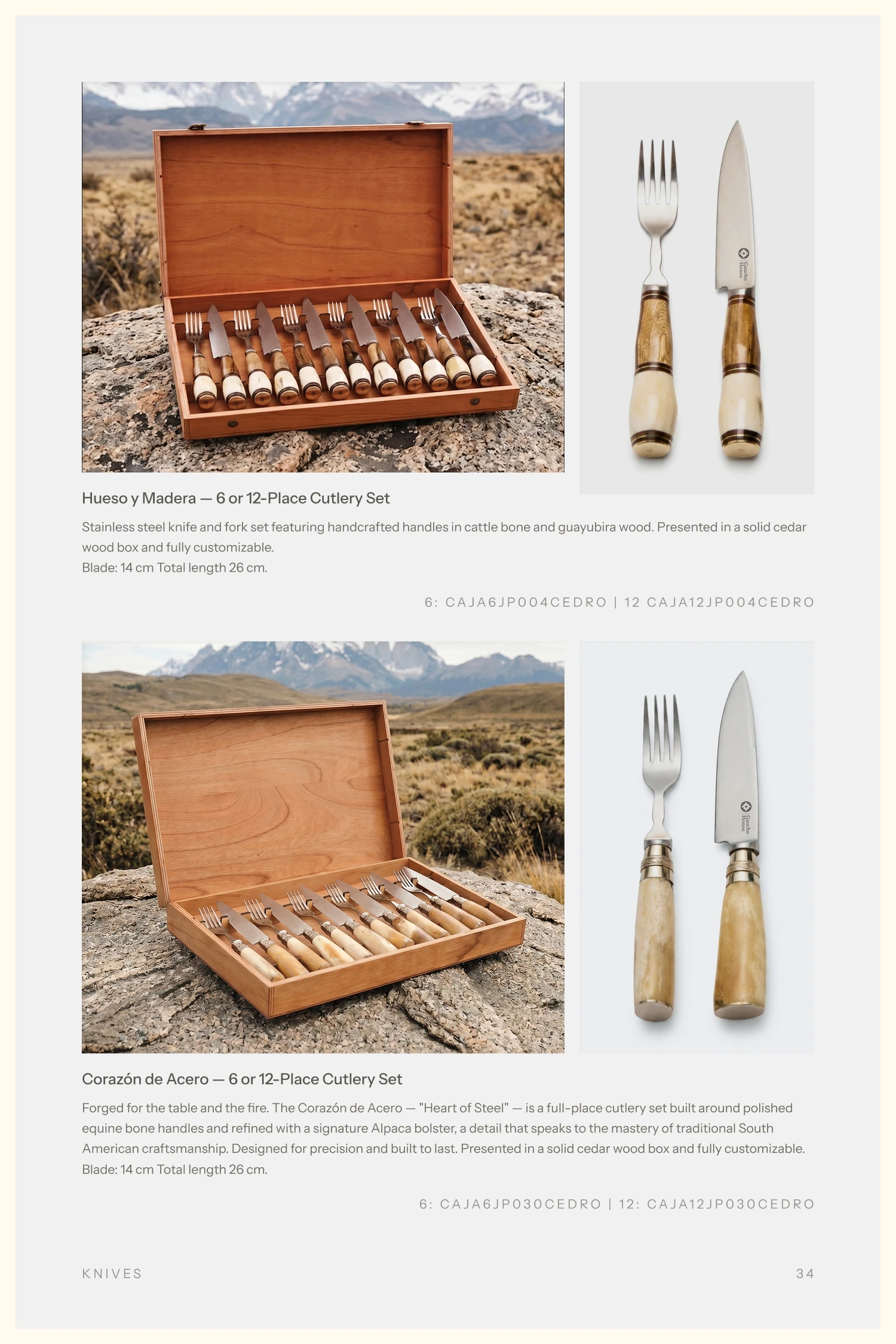
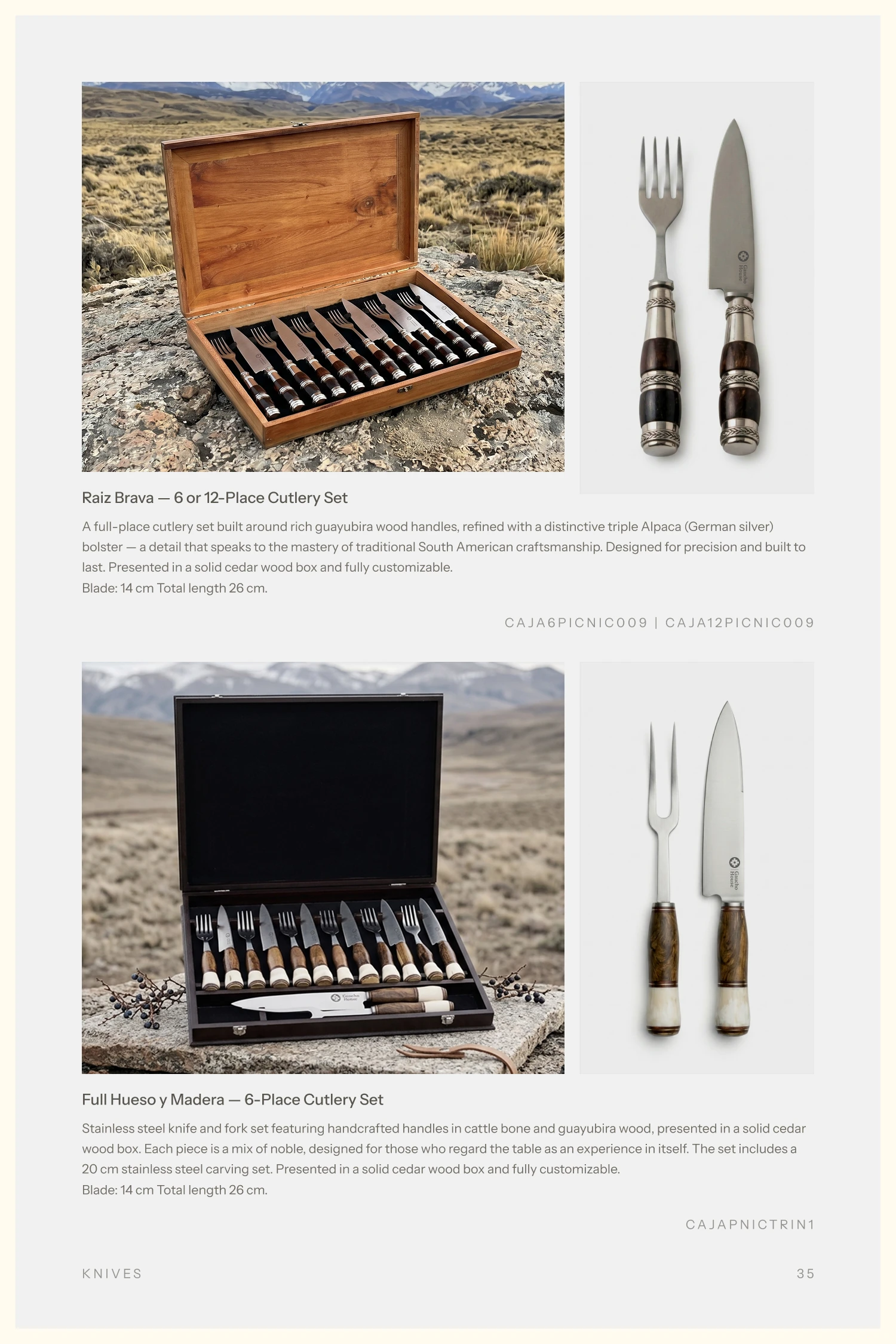
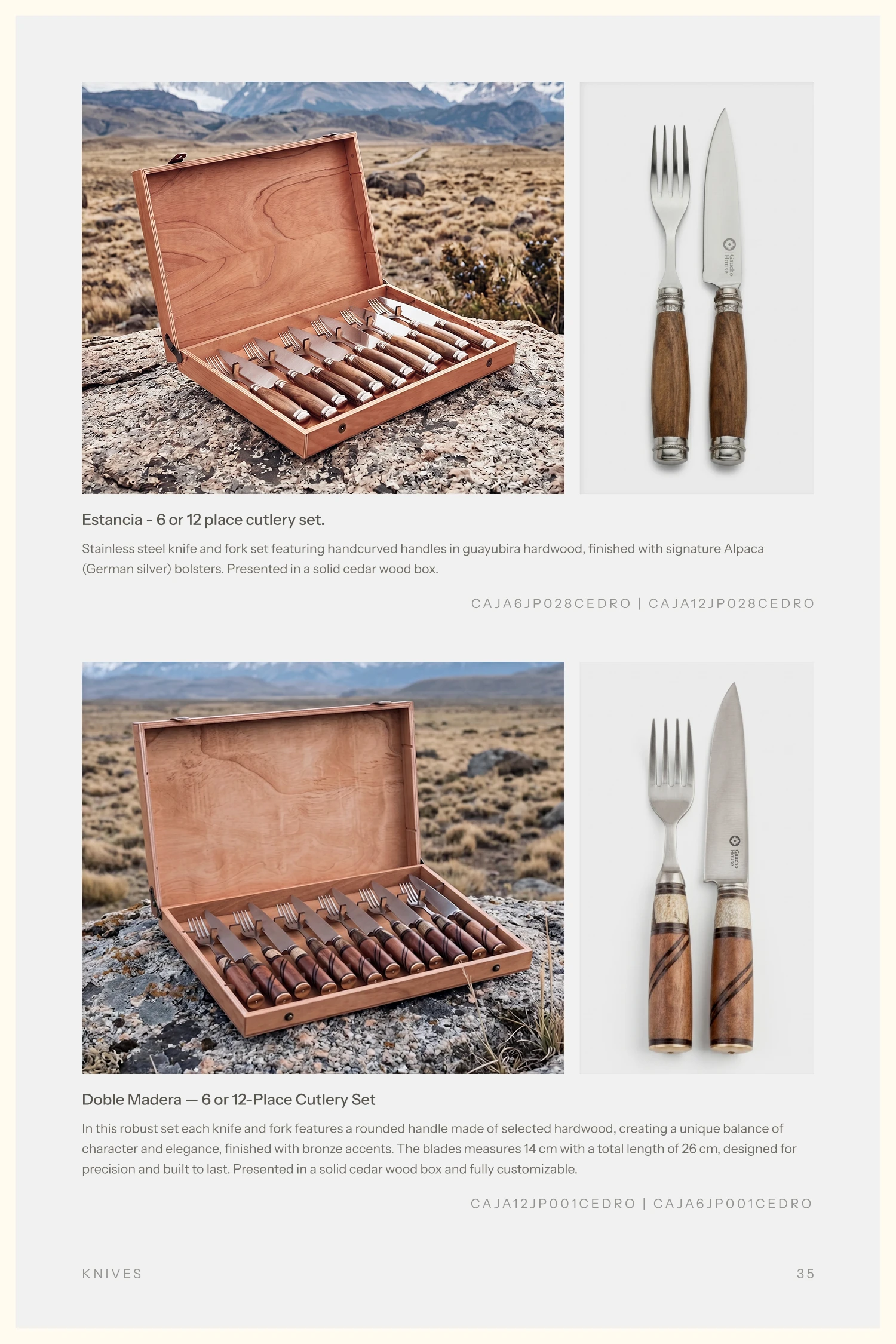
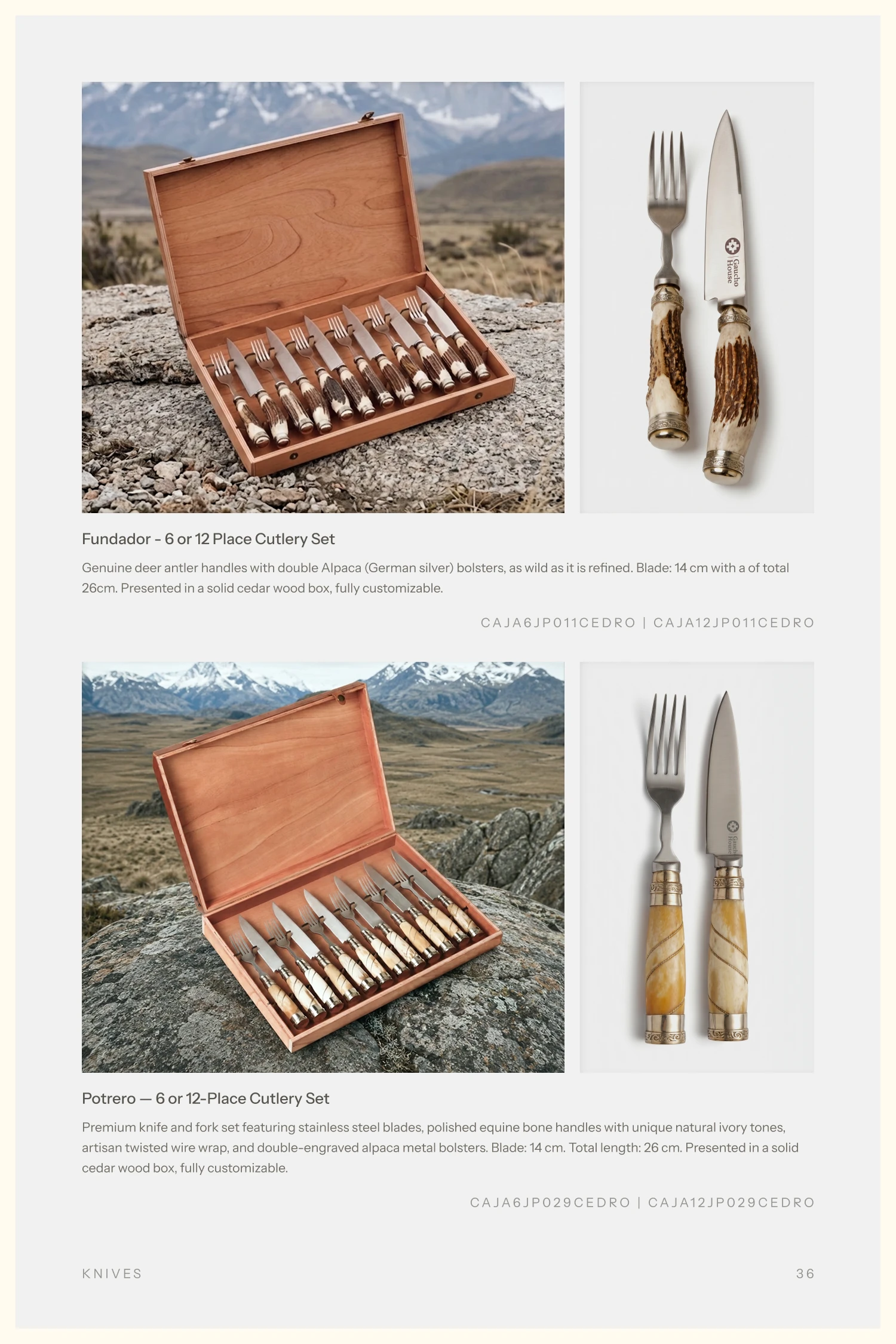
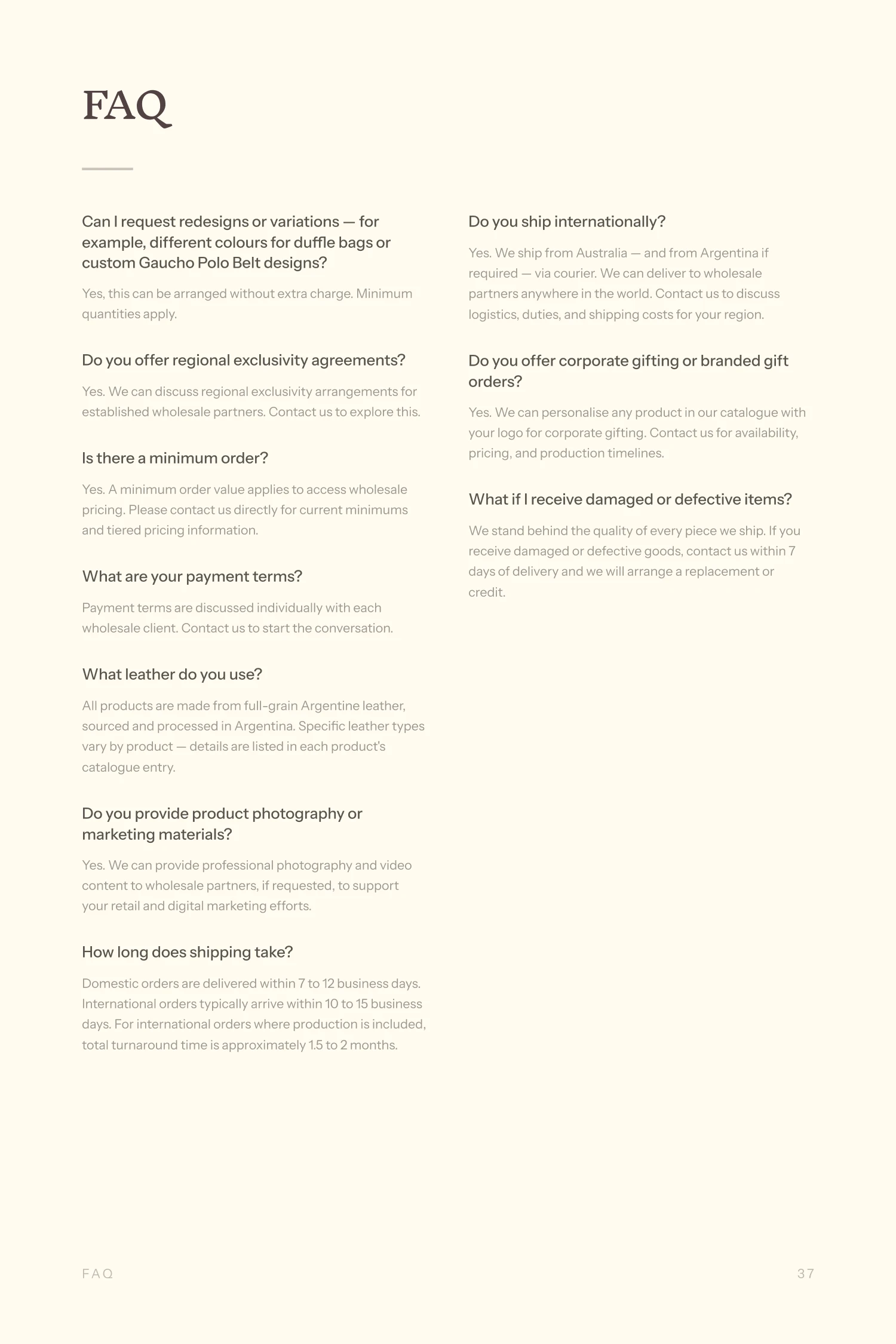
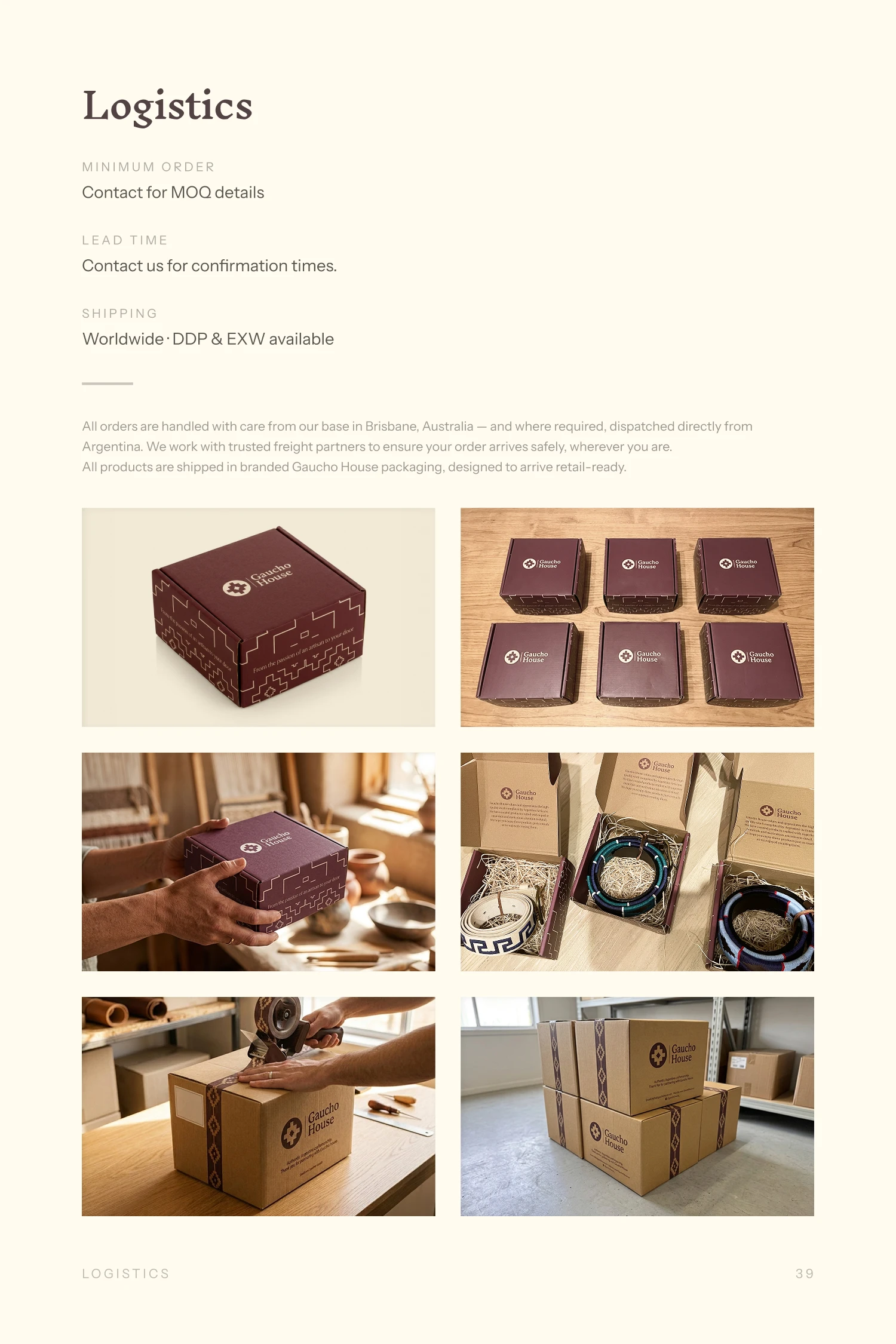
With both systems in place, I built the catalog for both brands the same way: a brand narrative opening (The Craft Narrative, The Gaucho & the Land, The Artisans — with real sourcing facts like the makers' average two decades at the bench), a visual index, then category spreads — Polo Belts, Fine Leather Goods, Leather Wallets, and the Polo Pet Collection for Gaucho House; Knives, Table Sets, and Grill Sets for Patagonia Forged — closing with an inventory reference, FAQ, and logistics section for wholesale partners.
The photography gap needed more than a one-off fix, so instead of just handing over a folder of generated images, I built and documented an AI photography prompt system as its own deliverable: a universal prompt for the Gaucho House catalog with category-specific variants, plus specialized prompts for Patagonia Forged covering distinct cases — placing a product into a Patagonian landscape, correcting the tone of existing field photography, isolating a single piece from a group shot, and placing an individual product in editorial context — each documented with usage notes and guidance on which AI tool produces on-brand results. That system is fully documented and handed off, so Gaucho House can keep producing consistent catalog photography on their own, for products that didn't exist yet when the project shipped.
Browse the complete Gaucho House and Patagonia Forged catalogs, page by page.
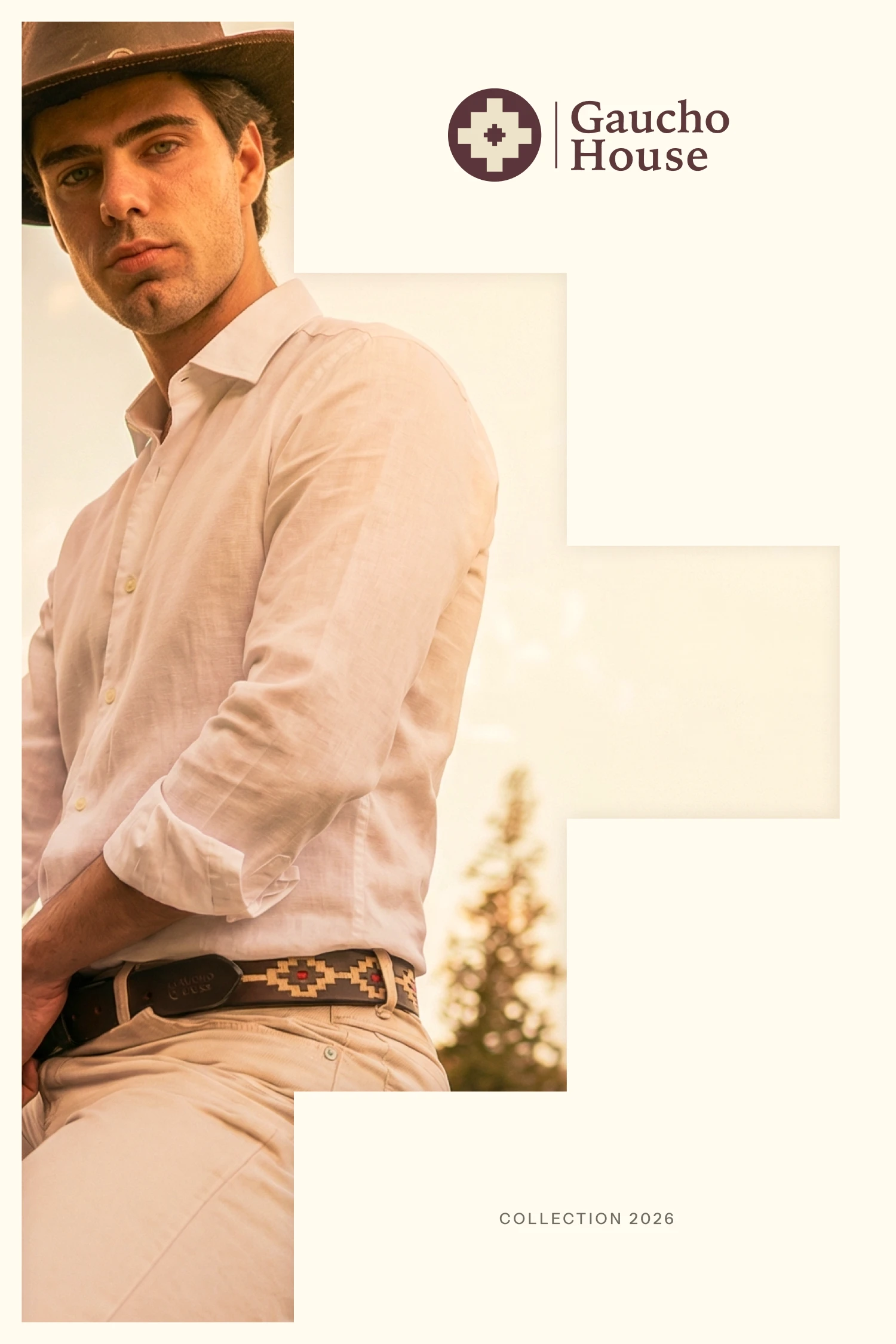
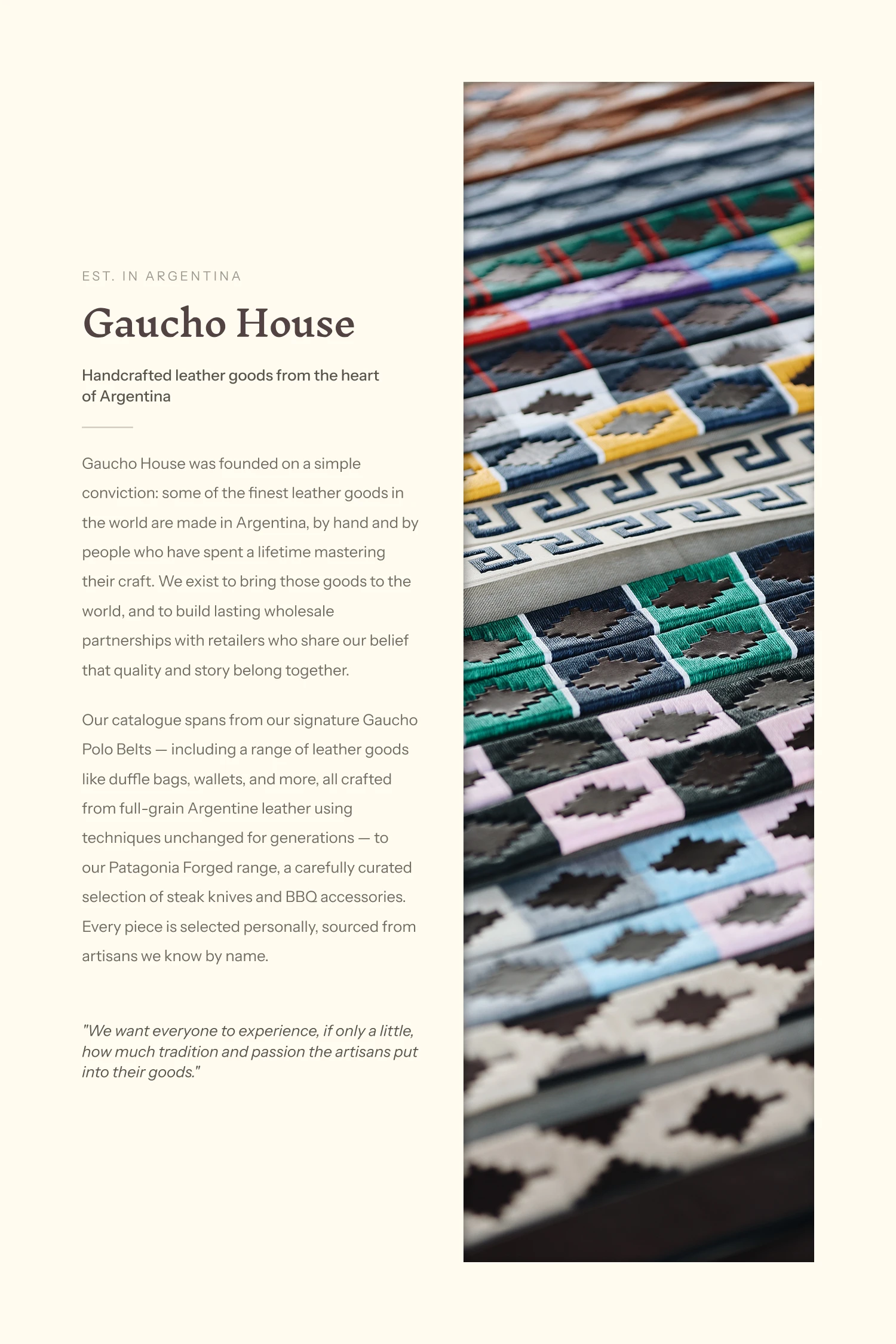
Page 1 of 29
A wholesale-ready catalog for both brands, a new visual identity for Patagonia Forged, and a documented AI photography system the client didn't have before and can now run on their own.
This one was as much about building a capability as building a catalog. Harmonizing Gaucho House's existing identity and documenting a photography system both came from the same instinct: the client shouldn't need a designer on call every time a new product needs a catalog-ready photo. The interesting decisions weren't the palette or the typography on their own — they were repairing an identity well enough to build on top of it, and treating AI-generated photography as a documented, repeatable system rather than a one-time fix.